In high-stakes industrial environments, achieving a perfect, leak-proof seal is rarely a simple task. Fluctuating pressures, extreme temperature variations, and irregular structural gaps frequently cause traditional static gaskets to fail, leading to catastrophic leaks, equipment damage, and costly production downtime. To combat these dynamic challenges, engineers turn to pneumatic and hydraulic sealing technology. However, the performance of these systems is entirely dependent on the engineering precision behind them. Selecting a top-tier inflatable seals manufacturer is the most critical decision a procurement officer or facility engineer can make. A premier manufacturer does not simply mold rubber; they engineer bespoke polymer solutions that adapt perfectly to highly specific operational demands.
This comprehensive guide explores the advanced mechanics, material sciences, and manufacturing protocols required to produce world-class inflatable seals. By examining the operational framework of industry leaders like BodeDynamic (Bode), we will uncover how the fusion of German engineering and agile global production delivers unmatched sealing reliability for complex sectors such as water treatment and industrial oil containment.
Core Manufacturing Strength: German R&D Meets Agile Production
When sourcing industrial components, the structural capability and background of the factory dictate the reliability of the final product. A fragmented or inexperienced supply chain often results in inconsistent batch quality, premature seal degradation, and missed delivery deadlines. The hallmark of a truly elite inflatable seals manufacturer is the ability to seamlessly integrate high-level research and development (R&D) with robust, scalable production infrastructure.
BodeDynamic exemplifies this ideal manufacturing synergy. Established as a specialized branch in 2008, Bode operates from a modern office headquarters located in the strategically advantageous International Shipping Center in Huli District, Xiamen, China. This location ensures highly efficient global logistics and rapid export capabilities. However, the true strength of Bode lies in its operational architecture, which bridges European precision with Asian manufacturing agility.
Key Pillars of Bode’s Factory Strength:
- German-Engineered Frontend R&D: The foundation of every high-performance seal is its chemical composition. At Bode, the frontend rubber compound research, development, and stringent production protocols are directed by engineers at the German headquarters. This ensures that every formulation meets world-class industrial standards before physical manufacturing begins.
- Extensive Production Infrastructure: To guarantee volume without sacrificing precision, Bode’s facilities are equipped with 30 state-of-the-art production machines. This machinery includes advanced extrusion lines and precision vulcanization presses capable of handling complex geometric profiles.
- Robust Collaborative Network: Bode manages a highly integrated supply chain by partnering with 5 specialized factories dedicated to finished product processing. This network allows for remarkable flexibility, whether fulfilling a small-batch custom prototype order or scaling up for massive global OEM distribution.
- Skilled Workforce: With a dedicated team of over 100 rigorously trained employees, the factory maintains strict quality control checkpoints at every stage of the manufacturing process, from raw material mixing to final pressure testing.
For procurement professionals, partnering with a manufacturer that possesses this level of infrastructure drastically reduces supply chain risk. It guarantees that the supplier has the financial stability, technical expertise, and physical capacity to serve as a long-term strategic partner.
Material Science Deep Dive: Compounds for Extreme Conditions
A dynamic seal is subjected to immense mechanical fatigue. It must inflate to close a gap under high pressure, maintain that barrier against harsh elements, and reliably retract upon deflation—thousands of times over its lifecycle. If the elastomer (rubber compound) is improperly specified, the seal will inevitably suffer from compression set (loss of elasticity), chemical swelling, or blowout failures.
Understanding material science is essential for any industrial buyer. A professional inflatable seals manufacturer provides transparent data regarding their polymer compounds and guides clients toward the exact formulation required for their specific working conditions.
Expert Analysis of High-Performance Elastomers:
- EPDM (Ethylene Propylene Diene Monomer): EPDM is the gold standard for the water treatment sector. It exhibits extraordinary resistance to ozone, ultraviolet (UV) light, and weathering. It performs exceptionally well in aquatic environments, handling temperature fluctuations from -40°C to +150°C. In municipal water filtration systems and sluice gates, EPDM prevents microbial degradation and resists the corrosive effects of chlorine and other purifying chemicals.
- FKM (Fluorocarbon / Viton™): When operating in the oil seal industry, standard rubber quickly dissolves or swells when exposed to hydrocarbons. FKM is an advanced synthetic rubber designed specifically for extreme chemical resistance and high thermal stability (up to 204°C). It is the mandatory choice for petrochemical containment, hydraulic fluid sealing, and heavy industrial machinery where oil and high heat intersect.
- NBR (Nitrile Butadiene Rubber): Known for its high tensile strength and excellent abrasion resistance, NBR is a highly cost-effective solution for standard oil, fuel, and solvent applications. While it does not boast the extreme temperature range of FKM, it is highly durable for dynamic mechanical parts that experience frequent friction.
- Silicone (VMQ): Ideal for pharmaceutical, medical, and food-and-beverage processing, silicone offers high purity and operates across a massive temperature spectrum (-60°C to +230°C). Reputable factories ensure their silicone compounds are fully FDA-compliant, non-toxic, and capable of withstanding strict steam sterilization (CIP/SIP) protocols.
Actionable Engineering Tip: When consulting with a manufacturer, always request the material’s “Curing Curve” and “Compression Set Data.” These metrics prove the material has been properly vulcanized and will retain its memory (ability to bounce back to its original shape) after long-term inflation cycles.
Advanced Product Advantages: The Mechanics of Dynamic Sealing
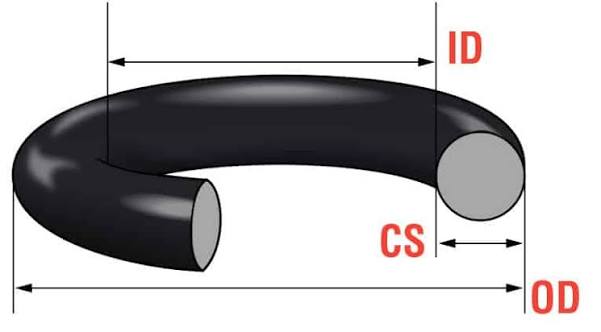
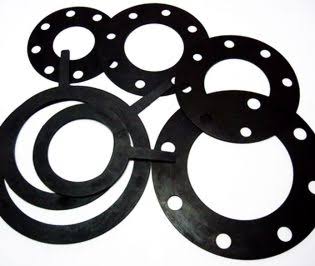
Traditional static seals, such as standard O-rings or flat rubber gaskets, rely on constant physical compression between two hardware surfaces to prevent leaks. This design is fundamentally flawed when dealing with large equipment, uneven surfaces, or doors/hatches that must be opened and closed frequently. Over time, the friction of opening and closing shears the static rubber, leading to rapid wear and tear.
Inflatable seals operate on a superior mechanical principle. They are extruded as hollow profiles and installed within a retaining groove. When a fluid or gas (usually compressed air) is introduced via a machined valve, the seal expands outward, conforming perfectly to the mating surface.
The Engineering Advantages of Bode’s Inflatable Technology:
- Frictionless Actuation: Because the seal is completely deflated and retracted into its groove during the opening or closing of a hatch, there is absolutely zero friction between the rubber and the opposing surface. This frictionless operation extends the lifecycle of the seal exponentially compared to traditional gaskets.
- Flawless Gap Bridging: Industrial machinery often suffers from manufacturing tolerances, warping over time, or misalignment. An inflated seal dynamically fills these irregular geometries, providing a 100% reliable, uniform pressure barrier that static rubber simply cannot achieve.
- Rapid Cycle Times: Designed for efficiency, these seals can be inflated and deflated in mere seconds. This rapid actuation is crucial for automated manufacturing lines, pharmaceutical airlocks, and rapid-access industrial autoclaves where time directly equates to revenue.
- Advanced Splicing Integrity: The weakest point of any inflatable seal is the splice—the joint where the extruded rubber is connected to form a continuous loop. Bode utilizes advanced, heat-press vulcanization techniques to seamlessly bond the joints. Unlike inferior cold-glued splices that rupture under pressure, a vulcanized splice maintains the exact same tensile strength, flexibility, and pressure rating as the rest of the seal.
Comprehensive Service Capabilities: Custom OEM & ODM Solutions
Industrial machinery is highly specialized, and off-the-shelf components rarely provide optimal performance. Engineers often find themselves modifying their expensive hardware to fit a standard seal. A truly professional inflatable seals manufacturer reverses this paradigm: they customize the seal to fit your machinery perfectly.
Since 2008, Bode has built its reputation on offering expansive Original Equipment Manufacturer (OEM) and Original Design Manufacturer (ODM) services. They operate as an extension of their clients’ engineering departments, providing bespoke solutions that cater to the most demanding industrial niches.
Bode’s Deep Customization Capabilities Include:
- Precision Dimensional Engineering: Regardless of the complexity of your retaining groove (dovetail, rectangular, or channel), Bode can extrude custom cross-sections. From micro-seals used in sensitive laboratory equipment to massive diameter seals required for aerospace wind tunnels or maritime bulkheads, exact sizing is guaranteed.
- Application-Specific Compound Mixing: If your operating environment involves a unique combination of abrasive slurries (common in wastewater treatment) and chemical solvents, standard materials will fail. Bode’s German R&D team formulates custom polymer blends that address the specific chemical and thermal attacks of your facility.
- Corporate Branding and Aesthetics: Customization extends to visual requirements. Bode offers full color-matching services for safety coding (e.g., high-visibility red for hazardous zones, blue for water treatment) and can mold or print custom corporate logos directly onto the seal for strict OEM inventory tracking.
- Versatile Valve Integration: The inflation mechanism is tailored to the client’s pneumatic systems. Whether the application requires threaded metal nozzles, O-ring sealed stems, or molded-in silicone tubes, the connection points are engineered for zero-leak integration.
Actionable Procurement Guide: Evaluating Your Sealing Partner
For procurement managers, sourcing a critical component like a dynamic seal carries significant operational risk. Partnering with a substandard supplier based on a low initial price quote often leads to massive financial losses due to catastrophic equipment failure and production halts.
To ensure your supply chain adheres to the principles of Experience, Expertise, Authoritativeness, and Trustworthiness (EEAT), you must utilize a strict evaluation framework. Below is an actionable, professional guide to auditing a potential inflatable seals manufacturer.
The 5-Step Supplier Audit Framework:
- Request Comprehensive Material Traceability: Never accept vague descriptions like “high-quality rubber.” Demand precise chemical data sheets. A trustworthy manufacturer like Bode will readily provide the technical specifications formulated by their German engineers, including Shore A Hardness, Tensile Strength (MPa), and Elongation at Break percentages.
- Audit the Design and Prototyping Process (Expertise): Inquire about the factory’s design methodology. Do they utilize Finite Element Analysis (FEA) software? FEA allows engineers to digitally simulate how the seal profile will expand and deform under your specific working pressures, eliminating design flaws before a physical mold is ever cut.
- Perform a Splice Integrity Test: Before committing to a bulk order, request a prototype and rigorously test the splice point. You should physically inspect the joint. If it feels significantly stiffer than the rest of the profile, or if you can see cold-glue residue, reject the supplier. Only accept fully heat-vulcanized joints capable of withstanding your maximum burst-pressure requirements.
- Evaluate Scalability and Equipment (Experience): Assess the factory’s physical capability to meet your long-term demands. Ask for an equipment list. Bode’s transparent disclosure of its 30 production machines, 5 cooperative factories, and 100+ staff proves they have the bandwidth to absorb sudden spikes in OEM order volumes without extending lead times.
- Verify Industry-Specific Track Records (Authority): A factory that excels in automotive door seals may lack the expertise to create high-pressure chemical seals. Request case studies or reference clients within your specific sector. Bode’s explicit focus on the highly demanding water treatment and oil seal fields demonstrates a proven authority in specialized industrial isolation.
Immediate Next Steps for Procurement:
Do not allow substandard sealing components to bottleneck your industrial efficiency. Utilize the technical data and evaluation frameworks outlined above to upgrade your supply chain. If you require precision-engineered, dynamically resilient solutions, contact Bode today. Leverage their German R&D expertise and efficient Xiamen manufacturing capabilities to initiate your custom OEM/ODM sealing project, ensuring your operations remain safe, sealed, and continuously productive.