In the complex world of industrial manufacturing, the integrity of a fluid or gas system relies heavily on one of its smallest components: the rubber seal. Whether in municipal water treatment facilities or high-pressure automotive engines, a failed seal can lead to catastrophic downtime, environmental hazards, and severe financial losses. When procurement managers and engineers begin searching for “rubber seal manufacturers near me,” they are typically hunting for more than just geographic proximity; they demand rapid communication, reliable supply chains, unwavering quality control, and deep technical expertise. This article explores the critical factors buyers must consider when selecting a sealing partner, utilizing the industry-leading standards of Bode (BodeDynamic) to illustrate what a world-class, customized manufacturing process looks like.
How to Evaluate Top-Tier Sealing Solutions for Extreme Conditions
When sourcing industrial seals, understanding the foundational science behind rubber compounds is essential. Procurement professionals often face the challenge of matching specific elastomeric properties to aggressive working conditions, such as extreme temperatures, high pressure, or chemical exposure. Relying on generic suppliers can result in premature material degradation.
To ensure long-term reliability, buyers must evaluate manufacturers based on their scientific approach to material selection:
- Thermal and Chemical Resistance Profiling: A professional manufacturer will provide extensive data on polymer performance. For example, standard Nitrile (NBR) is excellent for general oil applications but degrades rapidly above 120°C. In contrast, Fluorocarbon (FKM) can withstand temperatures up to 200°C and aggressive chemical environments.
- Compression Set and Tensile Strength: According to ISO 815 standards, a high-quality rubber seal must maintain its elastic memory over time. Manufacturers should provide Material Data Sheets (MDS) proving low compression set percentages, ensuring the seal will not flatten and leak under sustained pressure.
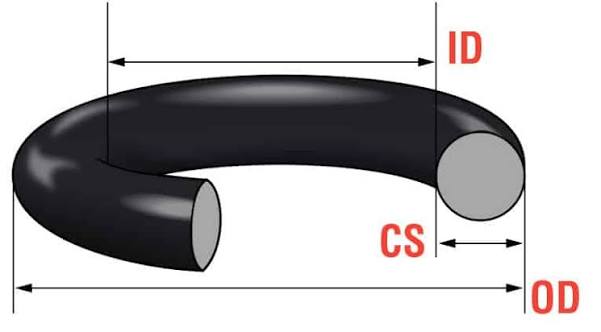
- Tooling and Dimensional Tolerances: Precision is non-negotiable. Modern sealing applications require dimensional tolerances that adhere to ISO 3601 standards for O-rings. Advanced factories utilize automated optical inspection (AOI) tools to guarantee that every batch meets exact specifications down to the micrometer.
Actionable Tip for Buyers: Before issuing a Request for Quotation (RFQ), utilize a chemical compatibility database (such as the Cole-Parmer chemical compatibility tool) to pre-determine the ideal elastomer family for your specific fluid. Presenting these exact parameters to your manufacturer will dramatically speed up the prototyping phase.
Inside BodeDynamic: German Engineering Meets Advanced Manufacturing
For buyers prioritizing both cutting-edge engineering and cost-effective production, BodeDynamic represents the gold standard in the sealing industry. Founded on a unique structural advantage, Bode combines European research and development with highly efficient Asian manufacturing capabilities.
Since establishing its specialized branch in 2008, Bode has built a formidable reputation as a top-tier custom manufacturer. The factory’s structural and operational strengths include:
- Strategic Location and Facility: The China branch is strategically located in the International Shipping Center of Huli District, Xiamen. This beautiful, highly accessible coastal hub ensures streamlined global logistics and rapid shipping times for international clients.
- R&D Driven by German Expertise: Unlike standard processing plants, Bode’s front-end rubber compounding and material research are spearheaded by German engineers at the headquarters. This ensures that the foundational raw materials meet rigorous European performance and safety standards before they ever reach the production line.
- Robust Production Capacity: The Xiamen operation is supported by 5 dedicated partner factories, managing the entire finished-product processing chain. Equipped with over 30 advanced production machines and a modern office complex, the facility employs over 100 skilled technicians, guaranteeing scalability for high-volume orders without sacrificing precision.
Advanced Rubber Compounds for Water Treatment and Oil Sealing
Different industries dictate drastically different sealing requirements. A manufacturer’s true expertise is demonstrated by its ability to navigate the strict regulatory and performance demands of specialized sectors. BodeDynamic has deeply cultivated its expertise in two primary fields: water treatment and industrial oil seals.
- Water Treatment Applications: Seals used in potable water systems must be non-toxic, resist chloramine degradation, and prevent bacterial growth. Bode formulates specialized EPDM (Ethylene Propylene Diene Monomer) compounds that meet strict global drinking water standards (such as NSF/ANSI 61 and WRAS). These specific formulations prevent the seal from hardening or cracking when exposed to modern municipal water sterilization chemicals.
- High-Performance Oil Seals: In the automotive and heavy machinery sectors, rotary shaft seals must endure high friction, rapid RPMs, and constant exposure to aggressive lubricants. Bode utilizes custom-blended NBR, HNBR, and Viton materials engineered to reduce shaft wear and minimize friction-induced heat.
- Adaptation to Custom Working Conditions: Beyond standard applications, the factory formulates custom rubber batches designed for specific operational anomalies, such as extreme weather exposure (UV/Ozone resistance) or highly abrasive slurries, ensuring prolonged operational lifespans for critical machinery.
OEM & ODM Solutions: Tailoring Dimensions, Logos, and Colors
When engineers search for “rubber seal manufacturers near me,” they are often trying to bypass rigid catalog suppliers in favor of partners who can adapt to proprietary designs. BodeDynamic excels in Original Equipment Manufacturing (OEM) and Original Design Manufacturing (ODM), offering a highly flexible, client-centric approach.
The customization journey at Bode encompasses several critical distinct services:
- Bespoke Dimensional Engineering: Standard sizes do not fit proprietary hardware. Bode accepts custom CAD files and provides reverse-engineering services to create precise molds for non-standard housing dimensions.
- Visual and Branding Customization: For brands that require component traceability or specific visual identification, Bode offers customized color-coding (e.g., blue for FDA compliance, green for high-temp) and can mold specific company logos or part numbers directly into the rubber surface.
- Agile Prototyping: The transition from a digital drawing to a physical product is seamless. The German R&D team works alongside the Xiamen production hub to rapidly produce tooling molds, allowing clients to test physical prototypes in their actual working environments before committing to mass production.
A Buyer’s Guide to Sourcing and Partnering with Reliable Factories
Identifying a capable manufacturer is only the first step; establishing a successful, long-term procurement relationship requires a systematic approach. To transition from a simple web search to a finalized production run, purchasing managers should follow a strict vetting and onboarding framework.
Here are the practical steps to successfully partner with a custom rubber manufacturer like Bode:
- Step 1: Define the Application Environment: Create a comprehensive spec sheet detailing the operating temperature range, maximum pressure (PSI/Bar), fluid type, and expected duty cycle. The more precise the data, the better the factory can formulate the rubber compound.
- Step 2: Request Production Audits and Certifications: Always verify a factory’s claims by requesting their ISO 9001 certification and specific material compliance reports (RoHS, REACH, FDA). A reputable factory will provide these transparently.
- Step 3: Initiate a Paid Prototype Run: Never jump straight to mass production for a custom part. Request a small batch of prototypes to perform real-world stress testing on your equipment. Evaluate the parts for flash (excess rubber on the edges), surface finish, and dimensional accuracy.
- Step 4: Establish Logistics and Lead Times: Capitalize on factories located in major shipping hubs. Clarify tooling lead times (typically 15-30 days for new molds) and mass production timelines to align with your internal supply chain schedules.
By prioritizing engineering depth, material science, and customization flexibility, buyers can secure a supply chain partner that actively enhances their product’s performance. For those ready to elevate their industrial sealing solutions, contacting a proven manufacturer like BodeDynamic is the first step toward a seamless, highly engineered future.