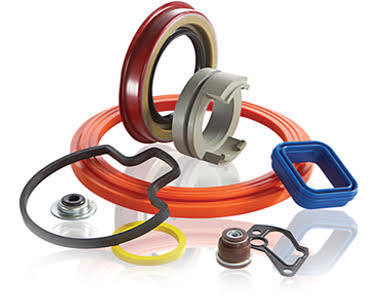
In the complex, high-stakes ecosystem of North American industrial plumbing, municipal water infrastructure, and heavy-duty hydraulic systems, the smallest components invariably dictate the operational integrity of the entire network. Across the United States and Canada, extreme climate fluctuations, highly aggressive water treatment protocols, and high-pressure industrial applications demand far more than commoditized, off-the-shelf rubber gaskets. Seal failure is not merely a maintenance nuisance; it is a critical vulnerability. According to historical data from the American Water Works Association (AWWA), compromised joints and degraded sealing elements contribute significantly to the estimated 14% to 18% of treated water lost daily within distribution systems. For heavy industries relying on oil seals, a blowout can mean catastrophic machinery failure and severe environmental compliance fines.
For procurement officers, sourcing engineers, and supply chain managers, selecting a premier manufacturing partner requires balancing advanced material R&D, rigorous quality control, and scalable production economics. This comprehensive guide explores the technical science behind high-performance pipe seals, delivers actionable strategies for procurement auditing, and illustrates how global leaders like Bode are establishing the ultimate benchmark for customized sealing technologies.
The Hidden Mechanics of Seal Failure in North American Infrastructure
To procure the right components, buyers must first understand the exact physics and chemistry of why standard seals fail in demanding environments. Modern plumbing and piping systems operate under a matrix of physical stressors. Understanding these failure modes allows procurement teams to ask suppliers highly specific, technically grounded questions during the vetting process.
- Pressure Extrusion and Clearance Gaps: In high-pressure pipeline environments, such as municipal water mains or industrial hydraulic pumps, the sealing elastomer is subjected to immense directional force. If the material lacks the appropriate tensile strength and durometer (hardness), the rubber will physically extrude into the micro-gaps between the mating hardware. Over time, this extruded material shreds away, destroying the seal’s structural integrity.
- Compression Set and Thermal Cycling: North American climates expose external and shallow infrastructure to punishing temperature extremes—from sub-zero winters in Canada to extreme summer heat in the American Southwest. When elastomers are compressed over time at varying temperatures, they can permanently lose their elastic memory, a metric known as “compression set.” When the hardware contracts during a cold snap, a seal with a poor compression set will not rebound to fill the gap, resulting in immediate leakage.
- Chemical Degradation via Chloramines: To ensure public health, North American water treatment facilities utilize aggressive chemical disinfectants. While chlorine has been standard, many municipalities have transitioned to chloramines, which remain active in the water longer. Chloramines are highly aggressive oxidizers that rapidly attack standard rubber compounds, causing embrittlement, swelling, and eventual cracking.
- Abrasive Friction in Oil Dynamics: In hydraulic valves and gear pumps, dynamic oil seals are subjected to constant friction against moving metal shafts. If the seal’s material is not formulated with internal lubricants or lacks high abrasion resistance, the friction generates localized heat that literally burns the elastomer, leading to scoring and fluid bypass.
Material Science Masterclass: Decoding Elastomers for Water Treatment and Oil Sealing
The foundation of any reliable, long-lasting seal is engineered at the molecular level. Standard factories simply purchase pre-mixed rubber compounds. However, the best Custom O-ring manufacturers engineer specific polymer blends tailored precisely to the end-user’s working environment. Here is a definitive guide to the essential elastomers used in top-tier plumbing and oil applications:
- EPDM (Ethylene Propylene Diene Monomer): The Water Champion
- Core Strengths: EPDM is the absolute gold standard for potable water, hot water, and steam applications. It offers extraordinary resistance to ozone, UV exposure, and weathering.
- The Technical Differentiator: For North American procurement, buyers must specify peroxide-cured EPDM rather than sulfur-cured EPDM. Peroxide curing creates stronger carbon-to-carbon crosslinks within the polymer matrix, providing vastly superior resistance to chloramines and extreme heat (up to 150°C / 300°F).
- NBR (Nitrile Butadiene Rubber): The Oil Specialist
- Core Strengths: NBR is the workhorse of the hydraulic and oil sealing industry. It provides excellent resistance to petroleum-based oils, mineral oils, and hydraulic fluids.
- The Technical Differentiator: The performance of NBR is dictated by its Acrylonitrile (ACN) content. High ACN content (over 45%) offers maximum oil resistance but sacrifices low-temperature flexibility. A premium manufacturer will balance the ACN ratio to match the specific operating temperature of your gear pumps and valves.
- FKM (Fluoroelastomer / Viton™): The Extreme Environment Guardian
- Core Strengths: When plumbing systems handle highly corrosive industrial chemicals, or when oil seals operate in high-friction, high-heat environments (up to 200°C / 392°F), FKM is required.
- The Technical Differentiator: FKM maintains its mechanical properties where standard elastomers melt or dissolve. It is frequently requested by OEM manufacturers designing heavy-duty industrial valves.
- Silicone (VMQ): The Temperature Flexible Choice
- Core Strengths: Retains incredible flexibility at extremely low temperatures (down to -60°C / -76°F) while remaining stable at high heat.
- Limitations: Silicone has poor tear strength and low abrasion resistance, making it suitable for static plumbing fixtures but inappropriate for dynamic oil seals.
The Bode Advantage: Bridging German Engineering and Elite Xiamen Manufacturing
Identifying a partner capable of executing advanced material science at a globally competitive scale is the ultimate goal of supply chain management. Bode (BodeDynamic) has strategically positioned itself as a titan in this space by combining European engineering precision with highly optimized Asian production capabilities.
Established as a dedicated branch in Xiamen, China, in 2008, Bode operates with a distinct, bifurcated business model that eliminates the compromises usually associated with overseas sourcing:
- Front-End German R&D: The most critical phase of seal manufacturing—the formulation of the raw rubber compound—is directed by Bode’s engineers at their German headquarters. This ensures that the material chemistry adheres to the strictest European automotive and industrial standards. Rather than relying on generic market materials, Bode’s formulations are scientifically designed for specific durability requirements.
- Unmatched Production Scalability in Xiamen: The actual production is executed at Bode’s Xiamen facility, which houses over 100 dedicated employees, a modernized corporate office, and 30 state-of-the-art production machines (including advanced compression and injection molding systems). To guarantee unlimited scalability for massive North American orders, Bode actively manages 5 specialized cooperative factories dedicated to finished product processing.
- Strategic Global Logistics: Location is a critical supply chain factor. The Bode facility is strategically situated in the Huli District International Shipping Center in Xiamen. This provides immediate, seamless access to one of the world’s busiest deep-water ports, ensuring rapid, uninterrupted freight forwarding directly to major North American hubs like Los Angeles, Long Beach, and Vancouver.
- Deep Industry Specialization: Unlike generalized rubber factories that produce everything from tires to toys, Bode is ruthlessly focused on two highly technical verticals: Water Treatment Systems and Oil Seals (including hydraulic pumps, hydraulic valves, and gear pumps). This intense specialization means their engineers intimately understand the regulatory and physical pressures of your specific industry.
OEM and ODM Capabilities: Defining the best Custom Seals manufacturer Solutions
In today’s competitive plumbing and hydraulic markets, proprietary equipment designs require proprietary sealing solutions. Standard O-rings often fail to accommodate the unique fluid dynamics of innovative valve or pump designs. Consequently, the best Custom Seals manufacturer must offer robust Original Equipment Manufacturer (OEM) and Original Design Manufacturer (ODM) services.
Bode excels in transforming client concepts into mass-produced reality through a comprehensive customization suite:
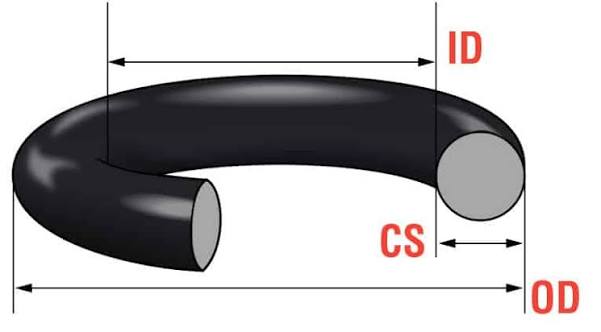
- Custom Dimensional Engineering: Standard AS568 O-ring sizes do not fit every application. Bode engineers custom molds to precise fractional millimeters, ensuring perfect compression ratios for non-standard housing glands.
- Working Condition Tailoring: Clients simply provide their operating parameters—maximum PSI, fluid medium (e.g., synthetic hydraulic oil or heavily chlorinated water), continuous operating temperature, and dynamic friction cycles. Bode’s German R&D team then formulates the exact durometer and elastomer blend required to survive those specific conditions.
- Brand Protection and Aesthetics (Logo and Color): For aftermarket parts, brand identity is crucial for preventing counterfeit replacements. Bode provides comprehensive aesthetic customization, including matching the rubber to specific Pantone colors (e.g., high-visibility blue for water, red for heat applications) and utilizing high-precision molding to emboss your corporate logo directly onto the seal’s surface.
- Reverse Engineering (ODM): If a client has a failing seal from a competitor, Bode’s engineering team can reverse-engineer the component, identify the chemical shortcomings using spectroscopy, and design a superior replacement geometry and material.
Actionable Procurement Framework: Auditing the best Custom O-ring manufacturers
When North American buyers source custom sealing components, mitigating supply chain risk is paramount. A low-cost quote is worthless if the resulting seal causes a million-dollar infrastructure leak. Use this actionable, step-by-step framework to audit potential factory partners like Bode:
- Step 1: Request Material Traceability and Rheometer Data
- Action: Never accept a generic “EPDM” or “NBR” label. Ask the manufacturer for a Moving Die Rheometer (MDR) curve for their batch materials. This test proves that the rubber has been cured perfectly.
- Why it matters: Bode’s integration with its German R&D team guarantees that material batches come with comprehensive traceability and exact curing data, ensuring zero variations between batch one and batch one thousand.
- Step 2: Audit Quality Control Automation
- Action: Ask the factory how they sort their O-rings. If they rely purely on manual human inspection, walk away.
- Why it matters: Premier manufacturers utilize Automated Optical Inspection (AOI) machines. These high-speed cameras scan every single O-ring as it drops through a machine, instantly rejecting parts with micro-tears, excess flash, or dimensional inaccuracies down to the micron level.
- Step 3: Evaluate Tooling and Prototyping Speed
- Action: Request a timeline for a custom mold prototype.
- Why it matters: In-house tooling capabilities drastically reduce lead times. A factory that outsources its steel molds will delay your product launch. Bode’s extensive infrastructure allows for rapid tooling, meaning your R&D team gets physical prototypes to test in days, not months.
- Step 4: Request PPAP Documentation
- Action: For high-volume or critical applications, demand a Production Part Approval Process (PPAP) Level 3 package.
- Why it matters: This standard automotive-grade documentation proves that the factory’s manufacturing process is stable, repeatable, and capable of meeting your exact tolerances over a long production run.
Decoding Industry Standards: Navigating North American Certifications
Professional procurement in the sealing industry requires strict adherence to regulatory standards. A factory’s ability to navigate these standards is a direct reflection of its technical competence and trustworthiness.
- NSF/ANSI 61 and 372 (Water Treatment): For any seal touching potable water in the United States or Canada, the material must be certified to not leach harmful toxins, VOCs, or heavy metals into the drinking supply. Producing NSF-61 compliant EPDM requires highly purified raw materials and pristine clean-room mixing environments. Bode’s expertise in the water treatment sector ensures compliance with these rigorous health and safety standards.
- ASTM D2000 Line Call-Outs: Instead of asking for “hard nitrile,” professional engineers use ASTM D2000 specifications (e.g., ASTM D2000 M2BG714 B14 EA14 EF11). This complex alphanumeric code dictates the exact testing parameters the rubber must pass regarding heat resistance, oil swell, and compression set. When engaging with Bode, buyers can utilize these exact line call-outs, knowing the German engineering team can translate them into precise chemical formulations.
- FDA Compliance (CFR 21.177.2600): For fluid dynamics involving food, beverage, or pharmaceutical processing, seals must meet FDA rubber article standards. This requires specific, non-toxic curing agents and post-cure baking processes to remove volatile residues.
Maximizing ROI: The True Cost of Premium Custom Seals
One of the most common pitfalls in industrial procurement is the commoditization trap—selecting a sealing partner based solely on the lowest piece price. However, when evaluating the total lifecycle cost of a plumbing system or a hydraulic gear pump, the initial cost of the seal is negligible compared to the cost of failure.
Consider the replacement of an inferior water main seal:
- Labor Costs: Dispatching a municipal crew to excavate a ruptured pipe costs thousands of dollars per hour.
- Downtime: Halting industrial hydraulic machinery due to a blown oil seal halts factory production, costing tens of thousands in lost revenue.
- Reputation Damage: A manufacturer of high-end hydraulic valves whose products leak in the field will quickly lose their market share.
Partnering with a sophisticated manufacturer like Bode acts as a proactive insurance policy. By leveraging their 2008-established manufacturing pedigree, their impressive fleet of 30 production machines, and the deep chemical expertise of their German R&D unit, procurement teams eliminate the risk of premature failure. You are not simply buying a rubber ring; you are purchasing engineered reliability.
Conclusion: Securing Your Supply Chain with Bode
As North American infrastructure ages and industrial fluid dynamics become increasingly demanding, the criteria for selecting a sealing partner have fundamentally shifted. It is no longer enough to find a factory that can mold rubber; today’s market demands a collaborative engineering partner capable of conquering complex chemical environments, extreme temperatures, and dynamic physical stresses.
BodeDynamic represents the pinnacle of this evolution. By flawlessly combining the front-end brilliance of German polymer research with the unmatched scale, efficiency, and logistical advantages of their Xiamen manufacturing hub, Bode provides a distinctly superior solution for the North American market. Whether you are engineering the next generation of municipal water treatment filtration systems, or designing high-pressure hydraulic gear pumps that demand indestructible oil seals, Bode possesses the technology, the workforce, and the customizable OEM/ODM capabilities to bring your vision to market.
Stop compromising the integrity of your hardware with commoditized gaskets. Elevate your engineering standards, streamline your supply chain, and ensure absolute operational reliability. Contact Bode today to initiate your custom engineering consultation, and discover why they remain the premier choice for global leaders in fluid dynamics.