1. Introduction: Engineering Precision in Custom Elastomeric Sealing
Elastomeric seals and O-rings are among the most critical components in modern industrial machinery, fluid dynamics, and environmental control systems. Operating silently within hydraulic pumps, chemical processors, water filtration networks, and heavy oilfield equipment, these components maintain pressure boundaries and prevent hazardous leakages. A single seal failure—often in a component costing less than a dollar—can trigger catastrophic system shutdowns, environmental contamination, regulatory penalties, and operational downtime exceeding tens of thousands of dollars per hour.
As global original equipment manufacturers (OEMs) design increasingly compact, high-efficiency equipment operating under extreme thermal, chemical, and mechanical stresses, off-the-shelf catalog seals frequently fall short. Modern applications demand tailored polymer chemistry, precise cross-sectional geometries, and specialized manufacturing protocols. Consequently, global procurement teams are shifting away from generic distributors and partnering directly with specialized custom seal manufacturers capable of delivering co-engineered elastomeric solutions.
Asia has firmly established itself as the world’s primary hub for advanced elastomeric manufacturing, offering unprecedented supply chain integration, raw material availability, and production capacity. However, navigating the Asian supplier ecosystem requires discernment. Distinguishing true engineering partners from low-cost commodity molders is vital for technical directors and procurement specialists. Finding the best Custom O-ring manufacturers requires evaluating more than raw unit cost; it demands a partner that merges rigorous European polymer science with agile Asian production infrastructure.
This comprehensive guide examines the technical, structural, and quality criteria necessary to evaluate custom sealing partners in Asia. Through the lens of advanced rubber compounding, international engineering standards, and rigorous testing methodologies, we analyze how leading manufacturers engineer reliability into every custom O-ring and seal profile.
2. Manufacturing Excellence: Bode’s German R&D and Asian Production Scale
The global sealing industry has undergone a structural transformation. Superior manufacturing models no longer rely solely on centralized European production or unguided offshore manufacturing. Instead, market leaders utilize hybrid operational frameworks that combine European material science with highly efficient Asian production hubs. Bode (BodeDynamic) exemplifies this model, bridging advanced German rubber compounding R&D with precision manufacturing in Xiamen, China.
Global Headquarters & Strategic Asian Hub
Established in 2008, Bode’s Asian operational headquarters in Xiamen is located within the International Shipping Center of the Huli District. This location provides direct access to deep-water shipping lanes, international air freight, and integrated supply chains across Asia, Europe, and North America.
- German Engineering Oversight: Core raw material formulations, polymer compound developments, and technical quality standards are engineered by German headquarters engineers. This guarantees that all custom elastomers adhere strictly to European material specifications and international performance criteria.
- Operational Infrastructure: The Xiamen headquarters houses a modern technical office facility, an advanced testing laboratory, and direct oversight over 30 sets of precision molding and processing machinery.
- Specialized Manufacturing Network: Bode operates an integrated manufacturing structure utilizing 5 dedicated partner production facilities. These specialized plants are optimized for distinct elastomer processing techniques, including compression molding, injection molding, transfer molding, and automated post-curing.
- Skilled Engineering Workforce: Supported by more than 100 dedicated employees—including polymer chemists, mold designers, quality control specialists, and international logistics coordinators—Bode delivers full lifecycle support from rapid prototyping to high-volume production.
Primary Industrial Focus Areas
Bode concentrates its engineering and manufacturing capabilities on industries where seal failure is not an option:
- Water Treatment & Filtration Infrastructure: Custom EPDM and silicone formulations certified for potable water contact, ozone resistance, and low chemical extraction in municipal and industrial filtration systems.
- Oil, Gas, & Fluid Power Systems: High-performance NBR, HNBR, and FKM seals engineered to withstand aggressive hydrocarbons, high dynamic pressures, synthetic lubricants, and rapid gas decompression (RGD).
- Heavy Duty Hydraulics & Pneumatics: Precision-molded rod seals, piston seals, wiper rings, and custom rotary oil seals designed for continuous mechanical duty in construction, agricultural, and industrial machinery.
By maintaining complete control over raw material compounding and utilizing specialized regional production facilities, Bode delivers customized elastomeric solutions that compete directly with top European manufacturers while maintaining the cost efficiency and speed of Asian production networks.
3. Material Science & Technical Mastery: Elastomer Selection and Standards
Engineering a custom seal begins with material selection. Elastomers exhibit complex viscoelastic behaviors, and selecting the incorrect polymer family or curing agent will lead to premature degradation, hardening, swelling, or mechanical shear failure. Partnering with the best Custom Seals manufacturer provides access to deep polymer chemistry expertise to ensure compound selection matches system requirements.
Polymer Chemistry & Application Matrix
Selecting the proper base polymer requires evaluating the operating media, working temperature limits, mechanical stress, and environmental factors such as UV and ozone exposure.
| Base Elastomer | ASTM D2000 Code | Operating Temp Range (°C) | Key Media Resistance | Primary Application Strengths |
| Nitrile (NBR) | BF, BG, BK | -30 to +120 | Petroleum oils, hydraulic fluids, water, mineral grease | High abrasion resistance, excellent cost-to-performance ratio for hydraulics. |
| Hydrogenated Nitrile (HNBR) | DH | -40 to +150 | Sour gas ($H_2S$), crude oil, automotive fluids, ozone | High tensile strength, superior heat and oil resistance compared to standard NBR. |
| Fluorocarbon (FKM / Viton) | HK | -20 to +200 | Aggressive chemicals, fuels, aromatic hydrocarbons, high vacuum | Exceptional thermal stability, chemical inertness in oilfield and chemical processing. |
| Ethylene Propylene (EPDM) | CA, CB, CC | -50 to +150 | Hot water, steam, ozone, brake fluids, diluted acids | Outstanding weathering resistance; certified for drinking water applications. |
| Perfluoroelastomer (FFKM) | JK | -15 to +320 | Highly concentrated acids, solvents, plasma, ultra-pure chemicals | Near-universal chemical resistance for extreme semiconductor and chemical processing. |
| Silicone (VMQ) | GE, FC, FE | -60 to +220 | Hot air, ozone, UV radiation, oxygen, food products | Wide temperature flexibility, non-toxic, ideal for medical and sanitary seals. |
Deciphering ASTM D2000 Line Call-Outs
Professional procurement and engineering teams rely on standard classification systems to specify material requirements clearly. The ASTM D2000 standard establishes a standardized line call-out system that defines the physical properties of vulcanized rubber materials.
A representative ASTM D2000 specification line call-out appears as follows:
$$\text{ASTM D2000 M 2 BG 7 14 B14 EA14 EF21}$$
Breaking down this specification demonstrates how precise compound properties are dictated:
- M: Indicates SI (metric) units are used.
- 2: Grade number, defining the specific test requirements required for the compound.
- BG: Type and Class. B indicates heat resistance testing at $100^\circ\text{C}$; G indicates oil swell resistance in IRM 903 oil (maximum $40\%$ swell).
- 7: Durometer hardness requirement ($70 \pm 5\text{ Shore A}$).
- 14: Minimum tensile strength ($14\text{ MPa}$, or approximately $2030\text{ PSI}$).
- B14: Suffix requirement for Compression Set resistance (tested per ASTM D395 Method B; max $25\%$ set after 22 hours at $100^\circ\text{C}$).
- EA14: Suffix requirement for Water Resistance (tested per ASTM D471; maximum volume change $\pm5\%$ after 70 hours at $100^\circ\text{C}$).
- EF21: Suffix requirement for Fuel Resistance (tested in Reference Fuel B; volume swell testing limits).
Working with a custom manufacturer capable of reading, formulating, and certifying compounds to strict ASTM D2000, ISO 3601, and DIN 3771 specifications guarantees that delivered seals perform predictably within designated engineering tolerances.
4. Customization Capabilities: Tailored OEM & ODM Solutions
Standard O-rings follow fixed dimensional charts (such as AS568, ISO 3601, or JIS B2401). However, high-performance OEM equipment frequently demands non-standard geometries, specialized color coding, custom hardness formulations, and low-friction surface treatments. Bode operates as a comprehensive OEM (Original Equipment Manufacturer) and ODM (Original Design Manufacturer) supplier, adapting engineering parameters to match exact application needs.
       OEM & ODM CUSTOMIZATION WORKFLOW

  [ Customer Parameters ] ──> Pressure, Temperature, Media, Motion
            │
            ▼
  [ Material Formulation ] ──> Hardness (30-90 Shore A), Color, Fillers
            │
            ▼
  [ Geometry Engineering ] ──> Custom Cross-Sections, Lip Profiles, Multi-materials
            │
            ▼
  [ Prototyping & FEA ]   ──> Finite Element Stress & Compression Analysis
            │
            ▼
  [ Tooling & Molding ]   ──> Precision CNC Multi-Cavity Vulcanization
            │
            ▼
  [ Final QC & Packaging ] ──> 100% Optical Sorting & Custom Branding / Logo
Dimensional and Geometrical Engineering
Custom seal manufacturing is not restricted to circular ring profiles. Advanced fluid systems often require unique cross-sectional geometry to optimize sealing force while minimizing friction:
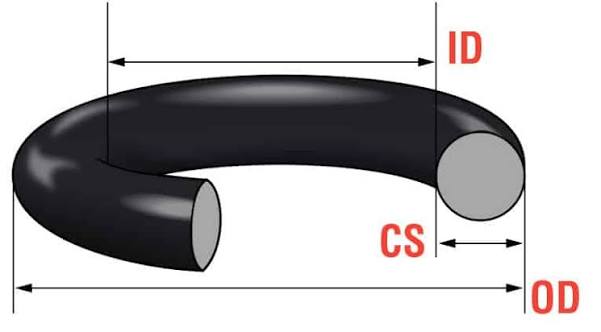
- Custom O-Rings: Non-standard inner diameters (ID) ranging from ultra-small $0.5\text{ mm}$ micro-rings up to large-diameter continuous molded rings exceeding $2000\text{ mm}$ without vulcanized splices.
- X-Rings (Quad-Rings): Four-lobed profile design providing twice the sealing surface, requiring lower radial squeeze, and eliminating spiral twisting in dynamic reciprocating applications.
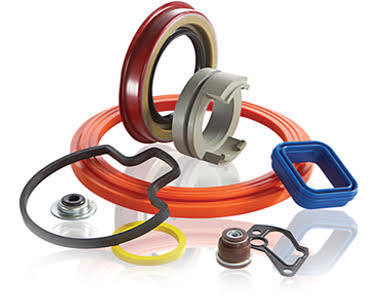
- Custom Lip & Oil Seals: Asymmetrical profile seals featuring spring-energized dynamic lips, dual dust wipers, and metal-cased reinforcements for rotating shafts.
- Custom Gaskets and Complex Profiles: Over-molded rubber-to-metal bonding, rubber-to-plastic composite seals, and custom frame gaskets tailored for electrical enclosures and pump housings.
Specialized Compound Tailoring
Custom manufacturing extends beyond dimensions into functional chemical formulations:
- Shore A Hardness Adjustments: Formulations ranging from soft 30 Shore A compounds for low-closure-force plastic housings up to rigid 90 Shore A compounds engineered to resist high-pressure extrusion.
- Color Matching & Error-Proofing: Custom color formulations (e.g., blue, green, red, yellow) integrated into the polymer matrix using heat-stable pigments. This enables immediate visual identification on automated assembly lines, preventing improper installation of visually identical compounds.
- Custom Branding & Identification: Direct laser marking or mold-imprinted logos, part numbers, and batch identification codes directly onto the elastomeric body or custom packaging.
- Specialized Application Formulations:
- Water Treatment: Extraction-free EPDM compounds engineered without sulfur donors to prevent organic leaching and bio-film formation, compliant with NSF/ANSI 61, WRAS, and KTW standards.
- Oil & Gas / Fluid Power: Explosive Decompression Resistant (EDR / AED) compounds designed to prevent internal void formation and micro-tearing during rapid depressurization in deep-well gas valves.
5. Quality Assurance: FEA Simulation, Standards, and Failure Prevention
Maintaining zero-defect quality across million-part production runs requires advanced engineering simulation, precise toolmaking, and fully automated inspection technologies. A premier custom seals manufacturer relies on quantitative quality validation rather than visual estimation.
Predictive Engineering with Finite Element Analysis (FEA)
Before cutting steel for production molds, Bode engineers perform non-linear Finite Element Analysis (FEA) to model elastomer behavior under simulated operating conditions.
       FEA CONTACT PRESSURE & GLAND FILL ANALYSIS

      ┌────────────────────────────────────────┐  <-- Static Gland Face
      │////////////////////////////////////////│
      ├───────────┬────────────────┬───────────┤
      │           │  (High Stress) │           │
      │  Void     │   Compression  │   Void    │  <-- Seal Deformation Profile
      │  Space    │     Zone       │   Space   │      (Target Gland Fill: 75-85%)
      │           │   [Contact]    │           │
      ├───────────┴────────────────┴───────────┤
      │////////////////////////////////////////│  <-- Dynamic/Mating Surface
      └────────────────────────────────────────┘
FEA modeling evaluates key mechanical metrics prior to tooling production:
- Contact Stress Distribution: Ensuring the maximum contact stress generated by the deformed seal consistently exceeds the fluid system pressure under all operating limits.
- Gland Fill Percentage: Verifying that thermal expansion does not cause the seal volume to exceed the available gland volume. The target gland fill ratio is typically maintained between $75\%$ and $85\%$, preventing total gland filling ($100\%$), which causes catastrophic extrusion and stress cracking.
- Compression Squeeze Optimization: Calculating initial installation squeeze—typically targeting $15\text{–}30\%$ for static seals and $10\text{–}20\%$ for dynamic application profiles.
Automated Inspection and Quality Metrics
To guarantee zero-defect shipments, modern manufacturing replaces manual inspection with optical automation.
- 100% Automated Optical Inspection (AOI): High-speed glass plate sorting systems equipped with multi-camera vision networks inspect $100\%$ of produced parts. Optical systems evaluate dimensional tolerances to within $\pm0.01\text{ mm}$ and instantly discard parts showing mold flash, voiding, surface scoring, or contamination.
- Compression Set Testing: Conducted per ASTM D395 Method B. Test samples are subjected to constant deflection ($25\%$) at elevated temperatures ($100^\circ\text{C}\text{ to }200^\circ\text{C}$) for designated durations ($22\text{ to }70\text{ hours}$). Lower percentage compression set values reflect superior elastic recovery and longer service life.
- Rheometer Vulcanization Control: Moving Die Rheometers (MDR) evaluate every batch of raw mixed compound to verify cure speed ($t_{90}$), minimum torque ($M_L$), and maximum torque ($M_H$), ensuring absolute batch-to-batch consistency.
Common Seal Failure Modes and Preventative Engineering
Understanding how seals fail allows design engineers to implement preventative measures during the customization process:
+------------------------+---------------------------------------+---------------------------------------+
| Failure Mode           | Root Cause                            | Engineering Solution                  |
+------------------------+---------------------------------------+---------------------------------------+
| Extrusion & Nibbling   | System pressure exceeds compound      | Increase Shore A hardness (e.g., from  |
|                        | modulus; excessive clearance gap.     | 70 to 90), reduce clearance gap, or   |
|                        |                                       | install PTFE back-up rings.           |
+------------------------+---------------------------------------+---------------------------------------+
| Compression Set Failure| Polymer matrix degrades under heat;   | Switch to peroxide cure systems;      |
|                        | permanent plastic deformation.        | select higher thermal grade polymer   |
|                        |                                       | (e.g., upgrade NBR to FKM).           |
+------------------------+---------------------------------------+---------------------------------------+
| Chemical Swell/Softening| Polymer absorption of operating media;| Re-evaluate chemical compatibility;    |
|                        | loss of tensile strength.             | switch base polymer family (e.g.,     |
|                        |                                       | EPDM to FKM or FFKM).                 |
+------------------------+---------------------------------------+---------------------------------------+
| Spiral Failure         | Uneven friction along ring perimeter  | Replace circular O-ring with four-     |
|                        | causing dynamic twisting in stroke.   | lobed X-Ring (Quad-Ring) profile.     |
+------------------------+---------------------------------------+---------------------------------------+
6. Procurement Framework: Evaluating the Best Custom Seals Manufacturer
Selecting an Asian custom seal manufacturing partner requires a structured procurement evaluation framework. Technical buyers and quality managers should utilize a systematic audit process when evaluating potential suppliers to ensure quality, supply chain security, and total cost efficiency.
       B2B PROCUREMENT AUDIT & ONBOARDING STAGES

  Stage 1: Material Verification ──> Sourcing Traceability & Mill Test Reports
  Stage 2: Tooling & Mold Audit  ──> CNC Capabilities & Tolerance Classes
  Stage 3: Rapid Prototyping    ──> Sample Validation & FEA Verification
  Stage 4: TCO & Supply Chain    ──> Tooling Life, Duty Cycles & Buffer Stock
  Stage 5: Technical Onboarding  ──> Engineering Sign-off & PPAP Approval
Step 1: Verify Polymer Sourcing and Traceability
Request documentation regarding raw polymer procurement. Leading manufacturers source base resins directly from top international chemical suppliers (such as Chemours, Solvay, DuPont, Lanxess, and Dow Corning).
- Demand batch-specific Mill Test Reports (MTRs) and Material Safety Data Sheets (MSDS).
- Verify full lot traceability from raw polymer compounding through vulcanization, trimming, and final packaging.
Step 2: Audit Tooling and Mold Fabrication Capabilities
The dimensional accuracy of a custom seal depends directly on mold tooling precision.
- Confirm the facility utilizes high-precision CNC spark erosion (EDM) and mirror-finish CNC mold-making machinery.
- Ensure molds are engineered to accommodate compound-specific shrinkage rates (elastomers shrink between $1.0\%$ and $3.0\%$ during vulcanization depending on polymer type and filler content).
- Verify compliance with ISO 3601-1 Class A dimensional tolerances for high-precision applications.
Step 3: Require Rapid Prototyping and Sample Validation
Shorten product development cycles by testing rapid prototypes before authorizing full-scale production tooling:
- Inquire about single-cavity prototype tooling options or rapid elastomeric machining capabilities.
- Request sample testing data including Shore A durometer validation, tensile testing (ASTM D412), heat aging (ASTM D573), and fluid immersion swell testing (ASTM D471).
Step 4: Calculate Total Cost of Ownership (TCO)
Evaluating suppliers strictly on piece-part price often overlooks hidden operational costs. A comprehensive TCO model factors in long-term reliability:
$$\text{TCO} = \text{Unit Purchase Price} + \text{Tooling Amortization} + \frac{\text{Field Failure Risk Penalty}}{\text{Expected Service Life Hours}}$$
Selecting a high-grade custom seal engineered with superior peroxide-cured fluoroelastomer may carry a minor unit price premium, but it dramatically extends maintenance service intervals, eliminates warranty claims, and protects brand reputation.
Step 5: Initiate Technical Onboarding and Engineering Consultation
Engage early with the manufacturer’s technical team. A true engineering partner evaluates gland hardware design, surface finishes ($R_a$ smoothness parameters), chamfer lead-in angles, and installation tooling before finalizing mold design.
Bode offers complete OEM and ODM engineering support, tailored polymer formulations, and certified quality control for custom sealing applications. Contact Bode’s technical engineering team in Xiamen today to evaluate project specifications, request sample material batches, and start your custom seal manufacturing partnership.