Table of Contents
- 1. The Strategic Value of Custom Seals in High-Specification Applications
- 2. Engineering Selection Guide and ASTM D2000 Polymer Mechanics
- 3. Bode Dynamic Manufacturing: German R&D Meets Xiamen Lean Production
- 4. End-to-End OEM and ODM Customization: From FEA to Final Delivery
- 5. Quality Assurance Architecture: Compound Rheology to 100% Optical Inspection
- 6. Evaluation Framework: Selecting the Best Custom O-ring Manufacturers
1. The Strategic Value of Custom Seals in High-Specification Applications
In the North American industrial landscape—spanning heavy hydraulic machinery, municipal water purification, oil and gas extraction, and advanced chemical processing—equipment performance is inextricably linked to the integrity of elastomeric sealing components. As operating environments push toward extreme thermal variations, multi-axis hydraulic pressure spikes, and aggressive chemical exposure, standard off-the-shelf O-rings increasingly reveal their structural limitations.
Standard catalog seals are manufactured to fixed dimensional tolerances and baseline material formulations. When deployed in complex, non-standard assemblies, they frequently introduce risks associated with tolerance stack-up, excessive media swelling, thermal degradation, and compression set failure. A single seal rupture can trigger unscheduled system downtime, costly environmental remediation, and severe safety liability.
To mitigate these operational risks, forward-thinking original equipment manufacturers (OEMs) and engineering procurement teams across the United States, Canada, and Mexico are shifting their supply chain strategies. Partnering with a proven Custom Seals manufacturer allows engineering teams to optimize seal geometry, tailor polymer chemistry for specific chemical exposure, and implement protective cross-linking matrices.
Choosing one of the best Custom O-ring manufacturers enables engineering teams to solve complex sealing challenges prior to commercial tooling. This strategic procurement approach ensures compliance with strict North American standards such as ASTM, NSF/ANSI, and ISO, ultimately lowering the total cost of ownership (TCO) for heavy-duty equipment.
2. Engineering Selection Guide and ASTM D2000 Polymer Mechanics
Material selection for elastomeric seals requires balancing mechanical stress, thermal stability, and chemical compatibility. In North America, elastomeric materials are primarily categorized under the ASTM D2000 (or SAE J200) standard specification system. Understanding this classification framework is essential for engineers and buyers specifying custom seals that must withstand demanding field conditions.
Deconstructing ASTM D2000 Line Callouts
An ASTM D2000 line callout serves as a comprehensive material specification. For example, consider the specification: ASTM D2000 M3HK714 B37 A1-10. Here is the engineering breakdown of what this code means:
- M: Designates metric units. If this is omitted, imperial units apply.
- 3: Grade number, defining the exact test requirements and severity levels.
- HK: Material Type (H) and Class (K). Type “H” specifies a maximum heat resistance temperature of 250°C (482°F). Class “K” restricts maximum volume swell in IRM 903 oil to 10%. This combination specifically points to a high-fluorine Fluorocarbon Elastomer (FKM).
- 7: Indicates a Shore A durometer hardness of 70 ± 5.
- 14: Specifies a minimum tensile strength of 14 MPa (approximately 2,030 psi).
- B37 and A1-10 (Suffix Requirements): “B37” mandates a compression set test according to ASTM D395 Method B (22 hours at 175°C with a maximum deformation threshold). “A1-10” designates heat resistance testing under ASTM D573 conditions.
Comprehensive Elastomer Performance Comparison
Selecting the right base polymer requires evaluating mechanical properties against operating media and thermal limits.
- NBR (Acrylonitrile Butadiene Rubber)
- Temperature Range: -30°C to +120°C
- Tensile Strength: 10 to 20 MPa
- Characteristics: Excellent resistance to petroleum-based oils, hydraulic fluids, and water. Vulnerable to ozone.
- Applications: General fluid power, automotive fuel systems, standard hydraulic cylinders.
- EPDM (Ethylene Propylene Diene Monomer)
- Temperature Range: -50°C to +150°C
- Tensile Strength: 8 to 18 MPa
- Characteristics: Outstanding resistance to hot water, steam, ozone, and polar solvents.
- Applications: Municipal water filtration, HVAC systems, food and beverage processing.
- FKM (Fluorocarbon Elastomer / Viton)
- Temperature Range: -20°C to +200°C (Special grades down to -40°C)
- Tensile Strength: 12 to 20 MPa
- Characteristics: Exceptional resistance to high-aromatic hydrocarbons, concentrated acids, and synthetic oils.
- Applications: Petroleum refining, chemical transfer pumps, aerospace fluid seals.
- HNBR (Hydrogenated Nitrile)
- Temperature Range: -40°C to +160°C
- Tensile Strength: 15 to 28 MPa
- Characteristics: High mechanical strength, excellent abrasion resistance, and sour gas (H2S) resistance.
- Applications: Downhole drilling bits, dynamic automotive timing belts, high-pressure oilfield valves.
Application-Specific Engineering Requirements
Water Treatment and Filtration Systems
Seals used in reverse osmosis (RO) pressure vessels, ozone disinfection chambers, and municipal valves must satisfy strict regulatory compliance. Materials must meet NSF/ANSI Standard 61 for drinking water components and FDA 21 CFR 177.2600 for food-contact surfaces. Furthermore, standard sulfur-cured EPDM compounds often degrade when exposed to chloramines and ozone. Upgrading to peroxide-cured EPDM formulations maintains molecular cross-link density, keeping compression set below 12% after extended testing (70°C for 70 hours in treated water).
Oilfield and Petrochemical Seals
High-pressure oil and gas environments subject seals to aggressive chemical fluids and Rapid Gas Decompression (RGD). Standard FKMs (66% fluorine) can degrade when exposed to amine-based corrosion inhibitors. Utilizing specialty terpolymer FKM compounds with fluorine levels between 68% and 70% delivers superior chemical resistance. For ultra-high-pressure gas systems (> 20 MPa), custom formulating high-durometer (85 to 90 Shore A) HNBR and FKM compounds prevents internal blistering and ensures compliance with ISO 23936-2 RGD testing standards.
3. Bode Dynamic Manufacturing: German R&D Meets Xiamen Lean Production
Navigating global supply chains requires balancing cost efficiency with strict quality control and deep technical expertise. Bode Dynamic (Bode) addresses this critical requirement through an operational model that combines European materials engineering with high-capacity Asian manufacturing.
Corporate History and Strategic Location
Founded in 2008, Bode Dynamic established its main manufacturing and exporting headquarters in the International Shipping Center, Huli District, Xiamen City, China. This strategic location provides immediate access to major deep-water shipping lanes and international air freight networks, facilitating prompt, unhindered delivery to clients across North America.
German Engineering and Front-End R&D
Unlike traditional trading companies or basic molding shops, Bode operates with a distinct technological advantage. Front-end polymer research and custom compound formulation are directed by highly experienced engineers at Bode’s German headquarters. This European engineering synergy ensures that raw rubber formulations—from high-performance FKM to custom EPDM blends—meet rigorous mechanical and chemical resistance criteria before entering mass production.
Manufacturing Infrastructure and Capacity
Bode’s Xiamen manufacturing center operates out of a modernized corporate facility housing an integrated technical team. The production footprint includes:
- A dedicated workforce of over 100 experienced personnel, including material scientists, CNC tooling engineers, and quality controllers.
- A core production floor equipped with over 30 sets of automated vacuum vulcanization and testing machinery.
- An integrated supply chain network comprising 5 specialized partner processing facilities. This decentralized yet highly controlled structure accommodates a broad range of production needs, from rapid small-batch prototype runs to high-volume commercial shipments for massive industrial projects.
4. End-to-End OEM and ODM Customization: From FEA to Final Delivery
Achieving zero-defect performance in custom sealing applications requires a highly structured engineering process. As a premier Custom Seals manufacturer, Bode Dynamic provides comprehensive OEM and ODM support, guiding projects from the initial CAD concept through proprietary tooling and final packaging.
Step 1: Application Engineering and FEA Simulation
Before cutting steel for molds, Bode’s engineering team utilizes Finite Element Analysis (FEA) to simulate seal behavior within designated hardware housings. This digital validation phase includes:
- Contact Pressure Distribution: Verifying that peak contact pressure along the sealing interface consistently exceeds system fluid pressure to prevent initial static leakage.
- Groove Fill Percentage Verification: Evaluating volumetric expansion under maximum operating temperatures to ensure the seal volume does not exceed 85% of the total gland volume, preventing thermal pinching.
- Extrusion Gap Analysis: Calculating clear gap tolerances under peak system pressures to determine if anti-extrusion backup rings are mathematically required.
Step 2: Customization Scope and Compound Fine-Tuning
Bode Dynamic tailors every physical and aesthetic aspect of a sealing component to meet exact specification requirements:
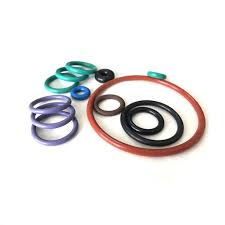
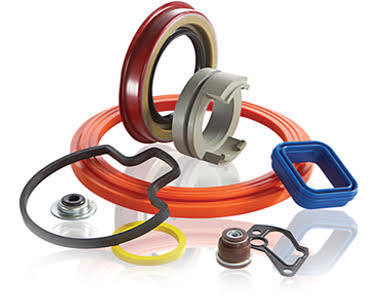
- Geometric Flexibility: Beyond standard AS568 and ISO 3601 sizes, Bode manufactures complex custom profiles, including X-rings, square cuts, U-cups, and micro-miniature or ultra-large-diameter molded seals.
- Extreme Condition Formulations: Adjusting polymer bases to operate across extended temperature ranges (from -55°C up to +315°C for FFKM) while maintaining resistance to aggressive chemicals and ozone.
- Branding and Visual Tailoring: Providing precise color matching using RAL or Pantone color systems to help assembly line workers avoid installation errors. Services also include laser marking of part numbers and specialized anti-static protective packaging.
Step 3: Rapid Tooling and Prototyping
Leveraging the advanced precision machining ecosystem in Xiamen, Bode develops high-grade CNC steel molds with remarkable speed. For North American clients facing tight product launch deadlines, Bode can deliver custom sample batches within a 7 to 10 working day turnaround, drastically accelerating the time-to-market.
5. Quality Assurance Architecture: Compound Rheology to 100% Optical Inspection
High-performance custom seals require a quality control process that leaves no room for batch-to-batch variation. Bode Dynamic has implemented a quality management architecture that aligns with automotive and aerospace standards, spanning from raw material validation to automated final inspection.
Raw Material and Vulcanization Process Control
- Mooney Viscosity and Dispersion Verification: Every inbound batch of raw polymer is tested for proper viscosity and filler dispersion to ensure compounding consistency.
- Moving Die Rheometer (MDR) Testing: During the in-process phase, vulcanization kinetics are evaluated for every batch. The MDR measures scorch safety time (t10), optimum cure time (t90), minimum torque, and maximum torque. This guarantees that the cross-link density is perfect before any rubber is pressed into a mold.
Physical Properties Post-Cure Verification
- Tensile and Elongation Testing (ISO 37): Computerized universal testing machines measure ultimate tensile strength and elongation at break, ensuring the material will withstand mechanical stress during automated assembly without tearing.
- Compression Set Evaluation (ISO 815): Seals are subjected to sustained high-temperature deflection (e.g., 22 hours at 150°C for certain grades) to evaluate spring-back recovery. Bode’s premium FKM compounds consistently maintain deformation rates below 15%.
- Fluid Immersion Testing (ASTM D471): Samples are soaked in standard reference oils and chemicals at elevated temperatures to verify that volume swell remains within the strictly defined ASTM D2000 limits.
Automated Defect Rejection (Outbound Inspection)
For high-volume production, manual visual inspection is insufficient. Molded seals at Bode pass through high-speed CCD (Charge-Coupled Device) automated optical sorting machinery. Multi-camera visual inspection systems measure dimensional tolerances to within ±0.05 mm and instantly detect micro-surface defects such as flash, parting line tears, voids, and inclusions. This automated process isolates non-conforming parts, maintaining an exceptionally low defect rate of below 50 PPM (Parts Per Million) for North American deliveries.
6. Evaluation Framework: Selecting the Best Custom O-ring Manufacturers
Selecting a reliable custom seal manufacturer requires evaluating technical capabilities, quality management systems, and supply chain reliability. For procurement managers and engineers in North America, the following criteria serve as a definitive checklist when auditing potential partners:
1. Compound Engineering and R&D Autonomy
A true custom manufacturer does more than just mold rubber. Verify if the supplier can develop proprietary, application-specific formulations rather than relying solely on generic catalog compounds. Bode Dynamic’s German-backed engineering team provides comprehensive Material Safety Data Sheets (MSDS) and customized compound development to eliminate premature chemical degradation in the field.
2. Tooling Capabilities and Prototyping Speed
In modern manufacturing, agility is just as important as accuracy. While generic distributors may quote 4 to 6 weeks for custom items, one of the best Custom O-ring manufacturers should control its tooling process. Bode Dynamic’s ability to provide rapid tooling and sample delivery in 7 to 10 days significantly reduces engineering iteration costs.
3. Quality Management and Automated Inspection
Ask potential suppliers how they mitigate defects. Manual sampling leads to assembly line jamming. Ensure the facility utilizes Moving Die Rheometers (MDR) for batch cure verification and 100% CCD Automated Optical Inspection to keep defect rates below the 50 PPM threshold.
4. Regulatory Compliance and Global Logistics
Ensure that the factory’s compounds are compliant with RoHS 3, REACH, FDA, and NSF/ANSI Standard 61. Furthermore, the supplier must have a robust export logistics framework. Operating out of the Xiamen International Shipping Center, Bode Dynamic is highly experienced in handling DDP and DAP shipping terms, providing seamless logistics support directly to North American facilities.
Partner with Bode Dynamic for Your Sealing Solutions
Securing the integrity of your industrial equipment starts with the right sealing partner. Bode Dynamic combines German compound engineering excellence with agile, high-capacity production capabilities in Xiamen, delivering custom seals engineered to perform under the most challenging field conditions.
Whether your project requires peroxide-cured EPDM components for municipal water applications, high-fluorine FKM seals for oilfield processing, or complex molded rubber profiles for heavy machinery, Bode Dynamic supports you from initial FEA analysis through to final commercial production.
Contact the Bode Dynamic engineering team today to discuss your specific application parameters, request an engineering consultation, or submit CAD drawings to initiate your custom manufacturing journey.