Table of Contents (TOC)
- Introduction
- The Critical Role of Wireforming Seals in Modern Industrial Operations
- Essential Core Competencies of Top Wireforming Seal Manufacturers
- The Bode Seals Advantage: German R&D Meets Unmatched Factory Strength
- Advanced Product Capabilities: Water Treatment, Oil Seals, and Customization
- Comprehensive Factory Service and OEM/ODM Capabilities
- Expert Actionable Guide: How to Select and Procure the Right Sealing Solutions
- Conclusion
Introduction
In the intricate world of fluid dynamics and mechanical engineering, the integrity of a system is only as robust as its weakest point. Frequently, that point is the seal. For procurement managers and lead engineers in North America and across the globe, sourcing high-performance sealing solutions is not merely a purchasing task; it is a critical risk-management strategy. While there is a high demand for top-tier wireforming seal manufacturers to support the aerospace, automotive, water treatment, and heavy machinery sectors, finding a partner that combines cutting-edge material science with scalable manufacturing efficiency is a complex challenge.
This comprehensive guide is designed to navigate the highly technical landscape of wireforming seals and custom rubber manufacturing. By exploring the core competencies required of top-tier suppliers, evaluating advanced material applications, and providing a step-by-step procurement framework, this article delivers actionable insights for industry professionals. Furthermore, we will delve into how Bode Seals—with its unique synergy of German R&D engineering and specialized manufacturing capabilities in Xiamen, China—stands as a premier benchmark for factory strength, product versatility, and customized OEM/ODM services in the global sealing industry.
The Critical Role of Wireforming Seals in Modern Industrial Operations
To truly appreciate the value of elite wireforming seal manufacturers, one must first understand the severe operational realities these components face. Wireforming seals, often integrated with rubber and elastomers to provide rigid structural support combined with flexible sealing lips, are essential for containing fluids, excluding contaminants, and maintaining pressure in dynamic applications.
The Physics of Sealing and Mechanical Failure
According to technical data from the European Sealing Association (ESA), nearly 50% of premature mechanical equipment failures can be traced back to improper seal selection or substandard manufacturing quality. A seal must withstand a triad of environmental stressors:
- Thermal Volatility: Environments that swing from sub-zero temperatures to exceeding 200°C (392°F).
- Chemical Degradation: Exposure to aggressive media, including synthetic lubricants, caustic water treatments, and highly corrosive petrochemicals.
- Mechanical Wear: High-velocity shaft rotations and severe pressure fluctuations that cause micro-abrasions and eventual extrusion of the seal material.
Educational Insight: The PV Factor
For engineers evaluating seals, calculating the PV (Pressure-Velocity) limit is crucial. The PV factor is the product of the pressure ($P$) operating on the seal and the surface sliding velocity ($V$). High-quality manufacturers design their wireforming seals to operate well below the material’s maximum PV limit to ensure longevity. This requires exact geometries and superior vulcanization techniques that only advanced factories can provide.
Essential Core Competencies of Top Wireforming Seal Manufacturers
When North American buyers evaluate potential manufacturing partners, they must look beyond basic pricing catalogs. A manufacturer’s ability to deliver consistent quality at scale hinges on several non-negotiable structural and operational pillars.
1. Precision Tooling and CNC Capabilities
The foundation of a reliable wireforming seal lies in the tooling. Elite manufacturers utilize multi-axis CNC (Computer Numerical Control) machining centers to produce molds with tolerances as tight as $\pm 0.01$ mm. This ensures that every batch of seals features zero flash (excess material) and perfectly uniform lip geometries, which is vital for maintaining a hydrodynamic lubricating film.
2. Advanced Raw Material Traceability
The performance of a rubber seal is directly proportional to the purity of its base elastomer. Top-tier factories maintain stringent incoming quality control (IQC) procedures. They partner with global chemical giants to source high-grade NBR, FKM (Viton), EPDM, and Silicone, ensuring full batch traceability in compliance with ISO 9001 and ISO 14001 standards.
3. Automated Quality Assurance Systems
Human inspection is no longer sufficient for high-volume sealing production. Leading wireforming seal manufacturers implement automated optical sorting machines. These highly calibrated optical sensors inspect each seal from 360 degrees, instantaneously identifying micro-cracks, dimensional deviations, or material inclusions, thereby achieving a near-zero defect rate before shipping.
The Bode Seals Advantage: German R&D Meets Unmatched Factory Strength
While the North American market boasts several domestic suppliers, the globalized supply chain has highlighted the immense value of cross-border industrial synergy. Bode Seals represents the pinnacle of this model, offering an unmatched combination of European engineering precision and Asian manufacturing efficiency.
Factory Overview and Heritage
Bode Seals operates with a highly strategic division of labor. The frontend material research, compound formulation, and engineering design are strictly managed by engineers at the German headquarters. To scale production and offer competitive global pricing, the Bode Xiamen branch was established in 2008 in China.
Key Factory Metrics and Strength:
- Strategic Location: Situated in the beautifully scenic and logistically optimal Huli District International Shipping Center in Xiamen, China. This ensures rapid global export and highly efficient supply chain logistics.
- Production Capacity: The facility operates with over 100 highly trained employees and is equipped with 30 state-of-the-art production machines, housed within a modernized office and manufacturing complex.
- Collaborative Ecosystem: Bode leverages the capacity of 3 specialized partner factories dedicated to finished product processing. This scalable ecosystem allows Bode to handle massive bulk orders while maintaining the agility needed for niche, custom prototype runs.
By centralizing R&D in Germany and execution in Xiamen, Bode provides international procurement managers with Tier-1 quality without the prohibitive overhead costs typically associated with purely domestic North American manufacturing.
Advanced Product Capabilities: Water Treatment, Oil Seals, and Customization
Bode’s product portfolio is engineered to address the most demanding industrial challenges, specifically dominating two critical sectors: water treatment and heavy-duty oil sealing.
Specialized Focus 1: Water Treatment Sealing Solutions
In municipal and industrial water treatment, seals must resist chemical disinfectants (like chlorine and chloramines) and comply with strict environmental and health regulations. Bode develops highly specific EPDM and FDA-compliant elastomer blends that prevent chemical swelling and degradation.
- Performance Metric: Bode’s water treatment seals demonstrate exceptional resistance to volumetric swelling, maintaining structural integrity over 10,000+ hours of continuous submersion in active chemical filtration systems.
Specialized Focus 2: Dynamic Oil Seals
For automotive, heavy machinery, and fluid power applications, oil seals must prevent lubricant leakage while blocking external dirt and moisture. Bode utilizes proprietary FKM and HNBR compounds designed for extreme thermal and chemical resilience.
- Structural Integrity: Incorporating advanced wireforming and metal casing technologies, Bode’s oil seals maintain optimal radial load on shafts, reducing friction torque and minimizing heat generation.
The Customization Edge
Understanding that off-the-shelf products often fail to meet the exact parameters of proprietary machinery, Bode excels in total product customization. Procurement teams can specify:
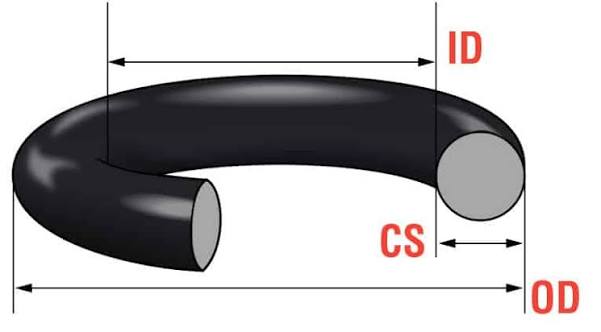
- Dimensional Geometries: Non-standard IDs (Inner Diameters), ODs (Outer Diameters), and widths.
- Aesthetic and Branding: Custom color-coding for inventory management and embedded corporate logos for OEM branding.
- Environmental Tuning: Custom compound mixing to match specific working conditions (e.g., maximizing cryogenic flexibility or high-temperature stability).
Comprehensive Factory Service and OEM/ODM Capabilities
A manufacturer’s value extends far beyond the physical product; it encompasses the entire lifecycle of the service provided to the buyer. Bode stands out among wireforming seal manufacturers by offering end-to-end OEM (Original Equipment Manufacturer) and ODM (Original Design Manufacturer) services.
1. Collaborative Engineering and CAD/CAM Design
When a client approaches Bode with a sealing challenge, the German engineering team utilizes advanced CAD (Computer-Aided Design) software and FEA (Finite Element Analysis) to simulate how the seal will perform under physical stress. This predictive modeling saves buyers thousands of dollars in physical prototyping and accelerates time-to-market.
2. Rapid Prototyping and Tooling
Once the design is validated in the virtual space, the Xiamen facility’s in-house tooling workshop can produce physical prototypes with remarkable speed. This allows buyers to conduct real-world bench testing before committing to mass production.
3. Flexible Minimum Order Quantities (MOQs) and Scalability
Unlike rigid legacy factories, Bode’s hybrid structure of a core facility backed by 3 partner factories allows for highly flexible scaling. Whether a North American buyer requires a specialized batch of 500 custom rings for a niche aerospace project or continuous weekly shipments of 100,000 oil seals for automotive assembly, Bode’s supply chain accommodates the demand seamlessly.
Expert Actionable Guide: How to Select and Procure the Right Sealing Solutions
For procurement officers, sourcing from global wireforming seal manufacturers requires a systematic approach to mitigate risk and ensure technical compliance. Below is a highly practical, step-by-step framework to apply during your next sourcing initiative.
Step 1: Define the “STAMP” Parameters
Before reaching out to a factory like Bode, engineers and buyers must perfectly define the operating environment using the STAMP acronym:
- Size: Exact shaft and bore dimensions, including dynamic runout tolerances.
- Temperature: Continuous operating temperature range, plus peak intermittent spikes.
- Application: What is the equipment doing? (e.g., Rotary oscillation, static pressure, high-speed continuous rotation).
- Media: The exact chemical composition the seal will contact (e.g., ATF oil, saline water, ozone).
- Pressure: The maximum internal system pressure (measured in PSI or Bar).
Step 2: Utilize a Chemical Compatibility Matrix
Actionable Tool: Do not guess material compatibility. Utilize an industry-standard Elastomer Chemical Compatibility Chart (such as the Cole-Parmer or equivalent engineering databases). Cross-reference your “Media” with materials like NBR, FKM, and EPDM. When requesting a quote, present this data to the manufacturer’s engineering team to verify their compound formulations.
Step 3: Mandate PPAP Documentation for OEM Parts
If you are sourcing for automotive or high-risk industrial machinery, require the manufacturer to provide a PPAP (Production Part Approval Process) package. This ensures that the supplier’s manufacturing process is capable of consistently producing parts that meet your specifications. Bode’s rigorous German-standard QA processes make generating such compliance documentation highly efficient.
Step 4: Conduct a Virtual or Third-Party Factory Audit
To ensure the trustworthiness and capability of a supplier, request a comprehensive virtual tour or hire a localized third-party auditor in Xiamen. Key areas to verify include:
- The condition and age of the vulcanization presses.
- The calibration records of the quality control measuring equipment (e.g., optical comparators, durometers).
- The raw material storage conditions (ensuring elastomers are kept in climate-controlled environments to prevent premature curing).
Conclusion
The landscape of industrial manufacturing leaves no room for error, and the seals you procure are the ultimate guardians of your machinery’s lifespan and safety. While North America offers various supply options, expanding your procurement strategy to include globally integrated wireforming seal manufacturers yields distinct competitive advantages in cost, scale, and technical depth.
Bode Seals perfectly exemplifies the gold standard of modern manufacturing. By merging the stringent R&D and compound engineering of its German headquarters with the rapid, scalable, and highly efficient manufacturing ecosystem in Xiamen, China, Bode delivers a frictionless OEM/ODM experience. From water treatment solutions to heavy-duty oil seals, their commitment to custom engineering—accommodating specific sizes, colors, and demanding working conditions—ensures that every client receives a perfectly tailored product.
For industry professionals seeking a reliable, long-term partner capable of solving complex fluid containment challenges, upgrading your supply chain begins with an expert consultation. Contact Bode Seals today to leverage decades of German engineering and start your bespoke customization journey.