Table of Contents
- Section 1: Engineering Standards & Selection Criteria for Custom Seals
- Section 2: Top 5 Custom Seal Manufacturers in North America & Strategic Partners
- Section 3: Specialised Sealing Systems: Link Seals, Glass-to-Metal, and Dock Shelters
- Section 4: Bode Seals: German Engineering Excellence & Global Production Capabilities
- Section 5: B2B Procurement Action Plan: Step-by-Step Vendor Selection Framework
Section 1: Engineering Standards & Selection Criteria for Custom Seals
Selecting custom industrial seals requires balancing elastomeric chemistry, mechanical design, and international regulatory compliance. Fluid handling systems across municipal water treatment, petrochemical plants, and heavy machinery experience premature seal degradation when specified without rigorous engineering audits.
+-----------------------------------------------------------------------+
|                       CUSTOM SEAL SELECTION MATRIX                    |
+-----------------------------------------------------------------------+
|  1. Chemical Compatibility  -->  Elastomer Compounding (EPDM, FKM)    |
|  2. Operating Environment  -->  Thermal Limits & Hydraulic Pressure   |
|  3. Regulatory Compliance  -->  NSF 61/372, WRAS, KTW/W270, KIWA      |
|  4. Mechanical Precision   -->  ISO 3601 Class A / ASTM D2000 Standards |
+-----------------------------------------------------------------------+
Key Technical Criteria for B2B Evaluation
- Elastomer Compounding & Polymer Selection: Base polymers dictate thermal stability, chemical resistance, and compression set. Standard options include:
- EPDM (Ethylene Propylene Diene Monomer): Excellent resistance to hot water, steam, ozone, and UV. Operates from -50°C to +150°C. Ideal for potable water systems.
- NBR (Nitrile Butadiene Rubber): High resistance to petroleum-based oils, fuels, and hydraulic fluids. Temperature range: -30°C to +100°C.
- FKM (Fluoroelastomer / Viton): Superior chemical inertia against aggressive acids, hydrocarbons, and high-heat environments up to +200°C.
- FFKM (Perfluoroelastomer): Near-universal chemical resistance for extreme semiconductor and chemical processing conditions up to +315°C.
- Global Sanitary & Potable Water Certifications: Seals installed in municipal or commercial water infrastructure must prevent toxic leaching and microbial growth. Key standards include:
- NSF / ANSI / CAN 61 & 372: North American health effects and lead-free compliance for drinking water components.
- WRAS (Water Regulations Advisory Scheme): United Kingdom mandatory approval for public water supplies.
- KTW / W270: German Federal Environmental Agency (UBA) guidelines regulating organic material safety and micro-organism growth prevention in water systems.
- KIWA: European certification for water distribution network components.
- AS/NZS 4020: Australian and New Zealand standard testing products in contact with drinking water.
- Manufacturing Tolerances & Physical Testing: Tooling precision determines dimensional repeatability. Leading facilities adhere to ISO 3601-1 Class A tight tolerances and utilize ASTM D2000 callout systems to define hardness (Shore A), tensile strength (MPa), and elongation at break (%).
Section 2: Top 5 Custom Seal Manufacturers in North America & Strategic Partners
Evaluating North American custom seal manufacturers requires assessing raw material sourcing, tooling design, prototype turnaround times, and global supply chain flexibility.
| Manufacturer | Primary Specialization | Key Certifications | Custom Capability Strength | Core Market Focus |
| Parker Hannifin Corp. | Large-Scale Industrial & Hydraulic Sealing | ISO 9001, AS9100, FDA | Global distribution network & vast standard catalog | Aerospace, Industrial Hydraulics, Automotive |
| Freudenberg Sealing Tech. | High-Volume Automotive & Industrial Seals | IATF 16949, ISO 14001 | Advanced material R&D & PTFE processing | Automotive OEM, Heavy Machinery, Energy |
| Minnesota Rubber & Plastics | Precision Custom Elastomer & Thermoplastic Molding | ISO 13485, ISO 9001 | Medical-grade micro-molding & multi-component assemblies | Medical Devices, Water Hydraulics, Transportation |
| Apple Rubber Products | Fast-Turnaround Custom O-Rings & Molded Shapes | AS9100D, ISO 9001 | Express custom tooling & broad elastomeric inventory | Defense, Industrial Equipment, Electronics |
| Bode Seals | German-Engineered Custom Rubber Rings, Water & Oil Seals | NSF/ANSI 61 & 372, WRAS, KTW/W270, KIWA, AS/NZS 4020 | German compound formulation with cost-effective global manufacturing | Potable Water Networks, Industrial Valves, Oil & Gas |
Operational Highlights of Leading Suppliers
- Parker Hannifin Corporation (Cleveland, OH): Offers an extensive material library and engineering capabilities for high-pressure hydraulic actuators and aerospace systems. Best suited for high-volume, standardized industrial orders.
- Freudenberg Sealing Technologies (Plymouth, MI): Specializes in high-performance radial shaft seals and custom elastomeric diaphragms, supported by global material testing laboratories.
- Minnesota Rubber & Plastics (Quadion LLC) (Minneapolis, MN): Focused on tight-tolerance elastomeric components and custom plastic-to-rubber bonded parts for sanitary valves and medical equipment.
- Apple Rubber Products (Lancaster, NY): Maintains complete prototype-to-production capabilities on-site, providing fast tooling turnaround for custom seal dimensions.
- Bode Seals (Global German Engineering Partner): Delivers German material engineering paired with direct manufacturing capabilities. Bode specializes in custom rubber rings, oil seals, and potable water seals certified across North American and European regulatory bodies.
Section 3: Specialised Sealing Systems: Link Seals, Glass-to-Metal, and Dock Shelters
Modern engineering applications frequently require specialized sealing architectures designed for unique mechanical stress points.
+----------------------------------------------------------------------------------+
|                          SPECIALIZED INDUSTRIAL SEAL TYPES                       |
+----------------------------------------------------------------------------------+
|  1. Modular Annular Seals   --> Interlocking rubber links expand under pressure  |
|  2. Glass-to-Metal Seals    --> Matched thermal expansion for hermetic feedthrough|
|  3. Dock Shelter Curtains   --> High-tear elastomeric fabrics for loading docks  |
+----------------------------------------------------------------------------------+
1. Modular Wall Penetration Assemblies
- Working with an experienced link seal manufacturer allows engineers to specify modular, interlocking elastomeric belt assemblies that create a hydrostatic seal around pipes passing through concrete walls, floors, or casings.
- Engineering Mechanism: As stainless steel bolts are tightened, pressure plates compress the rubber links radially against both the penetration sleeve and the outer pipe surface.
- Performance Criteria: Requires hydrostatic sealing up to 20 psig (40 feet of head pressure), electrical insulation between metallic pipes and wall structures, and long-term vibration dampening.
2. Hermetic Electronic & Sensor Feedthroughs
- Partnering with specialized glass to metal seal manufacturers is essential when designing hermetic enclosures for high-pressure, high-temperature, or vacuum environments.
- Engineering Mechanism: Glass preforms are molten-fused between metallic pins (Kovar, Invar, or stainless steel alloys) and an outer metal housing. The coefficient of thermal expansion (CTE) of the glass must closely match the metallic elements to prevent micro-fracturing during thermal cycling.
- Performance Criteria: Maintains helium leak tightness below $1 \times 10^{-9} \text{ mbar}\cdot\text{L/s}$ for subsea oil logging sensors, aerospace avionics housings, and hermetic refrigeration compressors.
3. Industrial Logistics Perimeter Weatherproofing
- Sourcing heavy-duty sealing materials from established dock shelter manufacturers ensures industrial loading bays maintain thermal insulation and prevent environmental ingress.
- Engineering Mechanism: High-resilience elastomeric wear sheets, side curtains, and top headers form a flexible seal around truck trailers during loading and unloading.
- Performance Criteria: Materials require tear resistance exceeding 40 kN/m, extreme abrasion resistance, and UV/ozone stabilization to withstand continuous mechanical cycling from commercial vehicles.
Section 4: Bode Seals: German Engineering Excellence & Global Production Capabilities
Bode Seals combines German elastomeric material development with modern manufacturing infrastructure to deliver custom sealing solutions for global OEM equipment manufacturers.
+----------------------------------------------------------------------------------+
|                             BODE SEALS OPERATIONAL ARCHITECTURE                  |
+----------------------------------------------------------------------------------+
|  FRONT-END R&D (GERMANY)      --> Material formulation & compounding science      |
|  MANUFACTURING HUB (XIAMEN)   --> Est. 2008 | Huli District Shipping Center       |
|  PRODUCTION INFRASTRUCTURE    --> 3 Processing Plants | 30+ Presses | 100+ Staff   |
|  CERTIFICATION MATRIX         --> NSF 61/372, WRAS, KTW/W270, KIWA, AS/NZS 4020 |
+----------------------------------------------------------------------------------+
Company Overview & Engineering Roots
- German Front-End R&D: Polymer compounding, structural FEA analysis, and technical design verification are directed by senior engineers at Bode’s German headquarters. This ensures every compound meets strict European physical and chemical performance standards.
- Established Global Hub (Xiamen): To serve international supply chains efficiently, Bode established its dedicated manufacturing subsidiary in 2008. Situated in the Huli District International Shipping Center, Xiamen, the location provides direct access to international maritime shipping lines and streamlined logistics.
- Production Footprint: Operations feature 3 specialized processing facilities, 100+ skilled personnel, 30+ advanced compression and injection vulcanization units, and a modern corporate engineering center.
Specialized Product Focus & Customization Scope
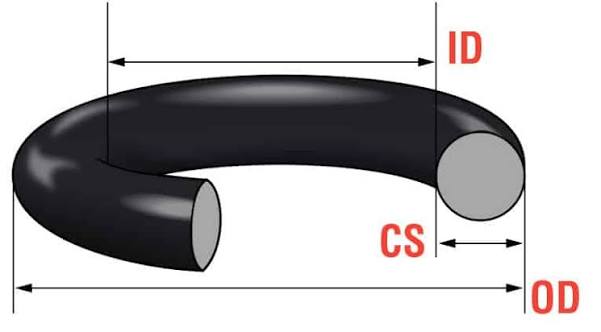
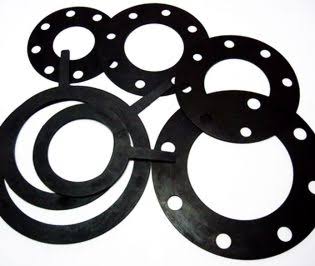
- Core Portfolio: Custom elastomeric O-rings, molded rubber seals, rotary oil seals, and custom gasket geometries engineered specifically for fluid control, municipal water infrastructure, and power transmission equipment.
- Comprehensive Drinking Water Approvals: Holds active international certifications including:
- NSF / ANSI / CAN 61 & 372 (North America)
- WRAS (United Kingdom)
- KTW / W270 (Germany)
- KIWA (Europe)
- AS/NZS 4020 (Australia / New Zealand)
- Full OEM & ODM Services:
- Custom Color Matching: RAL/PMS color compounding for easy identification of critical plant lines.
- Branding Integration: Laser-engraved or molded logos directly on elastomeric bodies.
- Non-Standard Geometries: Fully customized cross-sections, oversized diameters, and complex bonded metal-to-rubber seals.
- Extreme Operating Conditions: Custom formulations tailored for H2S sour gas resistance, extreme ozone exposure, food-contact compliance, and low-temperature flexibility down to -60°C.
Section 5: B2B Procurement Action Plan: Step-by-Step Vendor Selection Framework
Procurement teams evaluating global and North American seal manufacturers can follow this structured four-step audit process to verify technical capabilities, minimize supply chain risks, and reduce total cost of ownership (TCO).
+----------------------------------------------------------------------------------+
|                          VENDOR EVALUATION ACTION PLAN                           |
+----------------------------------------------------------------------------------+
|  Step 1: Material Compound Verification  --> Audit ASTM D2000 & Certificates      |
|  Step 2: Rapid Prototyping & DFM Check  --> Validate CAD, Moldflow & Samples     |
|  Step 3: Quality Control & Batch Audits --> Review CMM & Compression Set Data    |
|  Step 4: Logistics & TCO Optimization   --> Evaluate Lead Times & Custom Stocking|
+----------------------------------------------------------------------------------+
Actionable Evaluation Framework
- Material Compound Verification:
- Request full ASTM D2000 material callout sheets and third-party test reports for tensile strength, elongation, durometer, and fluid immersion aging.
- Verify regulatory compliance certificates (NSF, WRAS, KTW) directly against certifying agency databases to ensure active registration.
- Design for Manufacturability (DFM) & Tooling Validation:
- Submit CAD models (.STEP / .IGES) for preliminary mold-flow analysis to identify potential parting line flash, void risks, or weld-line weaknesses.
- Request initial prototype samples (3D printed elastomeric prototypes or single-cavity prototype tooling) before commissioning multi-cavity production molds.
- Quality Control & Physical Inspection Systems:
- Confirm the factory utilizes automated optical inspection (AOI) for 100% surface defect screening on high-volume runs.
- Verify batch-to-batch consistency protocols using rheometer cure curves and Coordinate Measuring Machines (CMM) for critical dimensions.
- Supply Chain & Total Cost of Ownership (TCO):
- Evaluate supplier stocking programs, vendor-managed inventory (VMI) options, and minimum order quantities (MOQs).
- Factor in freight lead times, custom tooling ownership terms, and technical support response times.
Partner with Bode Seals
Ready to optimize your custom fluid sealing systems with German engineering precision and global manufacturing efficiency? Contact Bode Seals today to discuss your project requirements, request material samples, or start your OEM/ODM custom tooling development program.