The global water purification industry is undergoing rapid technological advancement. From industrial reverse osmosis (RO) systems and municipal desalination plants to residential under-sink filtration units, the demand for pure, contaminant-free water has never been higher. At the heart of these complex fluid management systems lies a component that is small in size but critical in function: the elastomeric seal. A failing O-ring or custom gasket in a water purification system does not just cause a leak; it risks cross-contamination, bacterial growth, and the catastrophic failure of high-pressure filtration membranes. For procurement managers and system engineers, standard catalog rubber parts are no longer sufficient to meet stringent global drinking water standards. Achieving absolute system integrity requires partnering with the best Custom Seals manufacturer to develop specialized, media-compatible solutions. By combining advanced German polymer engineering with world-class production capabilities, BodeDynamic provides the ultimate sealing solutions tailored specifically for the water treatment sector.
The Science of Sealing in Water Purification Systems
Understanding why standard rubber seals fail in water purification systems is essential for preventing leaks and maintaining hygiene. For buyers and engineers, mastering the fluid dynamics and chemical interactions within water treatment is the first step in effective component sourcing.
Water is surprisingly aggressive to elastomeric materials over time. Two primary scientific challenges dictate seal longevity in this industry:
- Chloramine and Chlorine Degradation: Municipal water supplies heavily utilize chlorine and chloramines as disinfectants. Standard nitrile rubber (NBR) or sulfur-cured EPDM degrades rapidly upon prolonged exposure to these chemicals. The elastomers experience chain scission, causing them to swell, become sticky, and eventually break down into the water stream (carbon black shedding).
- Hydrolysis and Hot Water Swell: In systems involving hot water sanitation or steam sterilization, water molecules penetrate the polymer matrix of standard rubbers, leading to hydrolysis. This causes the seal to lose its tensile strength and compression set, resulting in flat-spotting and leakage under pressure.
- Bio-Film Accumulation: Imperfect seal geometries or microporous surfaces can create dead zones where bacteria (biofilm) accumulate, compromising water purity.
To combat these issues, high-performance water purification systems require peroxide-cured EPDM, specialized food-grade silicone (VMQ), or advanced fluorocarbons (FKM) that meet strict compliance standards such as NSF/ANSI 61 (USA), WRAS (UK), and KTW/W270 (Germany).
BodeDynamic: German Engineering Meets Manufacturing Excellence
Founded with a vision to redefine elastomeric reliability, Bode (BodeDynamic) stands at the forefront of the global sealing industry. While our dedicated manufacturing branch was established in 2008 in Xiamen, China, to specialize in custom rubber rings and seals for both the water treatment and oil seal sectors, our technical DNA is rooted in Europe.
Our operations are strategically located in the Huli District International Shipping Center in Xiamen. This prime geographical positioning ensures seamless global logistics, allowing us to deliver high-volume orders to international clients with maximum efficiency.
Our Manufacturing Powerhouse:
- German-Led Polymer R&D: The critical front-end research and development of our rubber compounds are entirely spearheaded by our German headquarters. Our European engineers formulate precise compound recipes that guarantee chemical resistance and material stability.
- Robust In-House Production: The Bode Xiamen facility operates over 30 state-of-the-art production machines, managed by a highly skilled workforce of over 100 dedicated employees, housed within a modern, technologically advanced office and manufacturing complex.
- Strategic Partner Network: To ensure scalable capacity and specialized finishing capabilities, we integrate with 5 carefully audited partner factories. This ecosystem allows us to handle massive volume spikes without ever compromising our strict quality control standards.
High-Performance Customization: Engineered for Clean Water
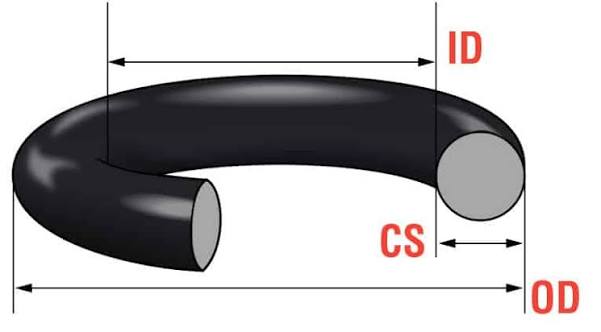
In the water purification industry, equipment designs are proprietary, and standard dimensions rarely fit perfectly. Recognized widely as one of the best Custom O-ring manufacturers, Bode excels by offering comprehensive customization that goes far beyond simply adjusting a diameter. We engineer the exact sealing solution your specific filtration system requires.
Every reverse osmosis pump, UV sterilizer housing, and ultrafiltration membrane requires a unique approach to friction, pressure, and media compatibility.
Our Customization Capabilities Include:
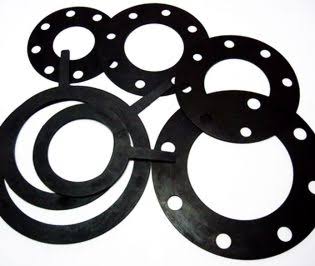
- Precision Dimensional Engineering: Whether you need a micro O-ring for a residential water dispenser or a massive custom-molded gasket for an industrial desalination flange, we manufacture to tight tolerances ($\pm 0.02 \text{ mm}$) to prevent pressure blowouts.
- Custom Color and Branding: We offer fully customized seal colors (e.g., blue for clean water, red for hot water, green for specific material grades). This acts as a Poka-Yoke (error-proofing) mechanism on your assembly line. Furthermore, we can mold custom logos and part numbers directly onto the seals for complete supply chain traceability.
- Specific Working Conditions: Our German R&D team customizes compound hardness (Shore A) and chemical resistance based on your system’s specific water pressure, pH levels, and operational temperature spectrums.
Agile OEM and ODM Capabilities for Water Treatment Brands
Leading water purifier brands and equipment manufacturers need a supply chain partner who is agile and capable of taking a product from a simple sketch to mass production quickly. Bode serves as a fully integrated OEM (Original Equipment Manufacturer) and ODM (Original Design Manufacturer) partner, drastically reducing your time-to-market.
We do not just produce parts; we co-engineer solutions that elevate your product’s reliability and market reputation.
The Bode OEM/ODM Advantage:
- Rapid Prototyping and Tooling: Upon receiving your CAD drawings or technical requirements, our in-house tooling department can machine custom molds and produce high-fidelity prototype batches in a matter of days, accelerating your R&D testing phase.
- Geometry Optimization: Our engineers analyze your hardware gland design and recommend geometric optimizations (such as X-rings or custom lip seals) to reduce friction in dynamic pump applications or improve static sealing in high-pressure filter housings.
- Stringent Quality Assurance: Every production batch undergoes rigorous visual and mechanical testing, ensuring absolute consistency from the first prototype to the millionth production unit.
A Procurement Manager’s Guide: Sourcing Water System Seals
For procurement teams and supply chain directors tasked with sourcing components for water purification equipment, evaluating vendors is a critical risk-management exercise. A cheap, non-compliant seal can result in massive product recalls and health safety violations.
Here is an actionable, step-by-step methodology to ensure you are sourcing the highest quality components for your water systems:
1. Demand Drinking Water Certifications Upfront
- Never assume a material is safe for drinking water. Ensure the manufacturer can formulate compounds that comply with global safety standards (FDA, NSF/ANSI 61, WRAS).
- Actionable Tip: Request detailed material data sheets and independent laboratory testing results before requesting a quotation.
2. Evaluate the Curing Process
- For EPDM seals in water applications, specify “peroxide-cured” rather than “sulfur-cured.” Peroxide-cured elastomers offer vastly superior resistance to chloramines and high temperatures, leaving no taste or odor in the water.
- Actionable Tip: Ask your vendor explicitly about their curing agents. Bode’s German R&D team specializes in advanced curing technologies to maximize lifespan in municipal water conditions.
3. Assess Prototyping Agility and Tooling Costs
- New filtration system designs often require numerous iterations. Evaluate how quickly a vendor can adjust a mold and provide new samples.
- Actionable Tip: Partner with manufacturers like Bode who maintain in-house CNC tooling capabilities. This eliminates third-party delays and significantly reduces your initial mold investment costs.
4. Prioritize Supply Chain Resilience
- Your vendor must be able to scale smoothly from small pilot runs to full-scale mass production.
- Actionable Tip: Review the manufacturer’s operational structure. Bode’s dual-engine model—combining 30 internal machines with 5 dedicated partner factories—guarantees uninterrupted supply lines, even during peak market demands.
By strictly applying these procurement criteria, water purification equipment manufacturers can secure a reliable supply chain. Partnering with a specialized, engineering-focused manufacturer like Bode ensures that your systems operate flawlessly, delivering clean, safe water to consumers worldwide. Contact the Bode team today to begin your custom sealing journey.