Modern gas pipeline networks operate under exceptionally demanding conditions, where high-pressure transport, corrosive media, and extreme thermal fluctuations test the limits of infrastructure integrity. In regions characterized by sprawling energy distribution grids—such as North America and East Asia—even a microscopic seal failure can lead to catastrophic gas leakage, environmental contamination, and severe regulatory penalties. Sourcing reliable sealing components is therefore not merely a routine procurement task, but a critical engineering safeguard that dictates the safety, efficiency, and longevity of entire energy transmission systems.
Elastomer selection, compound stability, and dimensional precision determine how well a pipeline withstands continuous mechanical stress and chemical degradation over decades of service. As global operators demand higher standards for fugitive emission control and zero-leakage performance, partnering with industry-leading component specialists has become paramount. This article explores the engineering foundations, manufacturing capabilities, and material science required to secure gas pipeline infrastructure, highlighting why engineering leaders turn to specialized partners like Bode for mission-critical custom sealing solutions.
Engineering Excellence: Why Bode Stands Among the Best Custom Seals Manufacturers
Navigating the complexities of high-pressure fluid and gas containment requires deep material science expertise and rigorous manufacturing discipline. Bode has established itself as a premier global partner by bridging precision German engineering principles with agile, large-scale production capabilities in Asia, positioning the company among the best Custom Seals manufacturer options worldwide.
- German Engineering Heritage: Front-end rubber compound research, formula development, and chemical engineering protocols are directly overseen by senior German headquarters engineers, ensuring European quality standards are baked into every polymer batch.
- Core Sector Specialization: Over a decade and a half of dedicated industry experience across high-stakes sectors, including gas transmission pipelines, municipal water treatment systems, and heavy-duty industrial oil seal applications.
- Advanced R&D Framework: Continuous formulation testing to optimize elastomer cross-linking density, resilience, and resistance to chemical swell, ensuring compounds perform reliably under aggressive operational environments.
- Cross-Border Technical Synergy: Combining Western technical rigor with streamlined Eastern manufacturing efficiencies to deliver high-performance solutions that meet stringent international regulatory benchmarks.
Advanced Manufacturing Strength and Infrastructure: Inside Bode’s Xiamen Operations
Operational scale and infrastructure sophistication directly influence batch consistency, lead times, and cost-efficiency. Since establishing its specialized operations in 2008, Bode has built a robust manufacturing ecosystem designed to support global OEMs and tier-1 distributors.
- Strategic Geographic Location: Headquartered in the International Shipping Center within the scenic and logistically optimized Huli District of Xiamen, facilitating rapid global export and supply chain agility.
- Integrated Production Ecosystem: Operates through a modern corporate headquarters backed by 5 specialized cooperative partner factories dedicated to precision finished-product processing and molding.
- Skilled Human Capital: Supported by a dedicated workforce of over 100 experienced professionals, including production technicians, quality assurance specialists, and customer service engineers.
- Modern Equipment Fleet: Equipped with 30 state-of-the-art production and vulcanization equipment units, ensuring precise temperature and pressure control during the critical curing phase of elastomer manufacturing.
Superior Product Advantages in High-Pressure and Extreme Gas Pipeline Applications
Gas pipelines subject elastomeric seals to unique mechanical and environmental stressors, including rapid gas decompression (RGD), sour gas exposure, and severe temperature swings. Standard off-the-shelf components frequently fail under these conditions, making bespoke design essential.
- Gas Permeability Resistance: Proprietary elastomer formulations engineered with low molecular diffusion rates to prevent natural gas and hydrogen blends from permeating through the seal matrix.
- Compression Set Resilience: Exceptional elastic recovery characteristics that maintain constant radial energization against flange faces and valve seats, even after decades of continuous mechanical loading.
- Thermal Range Adaptability: Compounds formulated to withstand extreme sub-zero winter temperatures in northern operating zones as well as high frictional heat generated in high-pressure compressor stations.
- Sour Gas and Condensate Tolerance: Specialized grades resistant to hydrogen sulfide ($H_2S$), carbon dioxide ($CO_2$), and heavier hydrocarbon condensates commonly found in raw natural gas streams.
Comprehensive OEM/ODM Services and Customization Capabilities for Global Partners
Every pipeline project presents unique engineering constraints, whether retrofitting legacy infrastructure or designing next-generation valve assemblies. Bode provides flexible OEM and ODM partnership models designed to adapt seamlessly to specific client requirements.
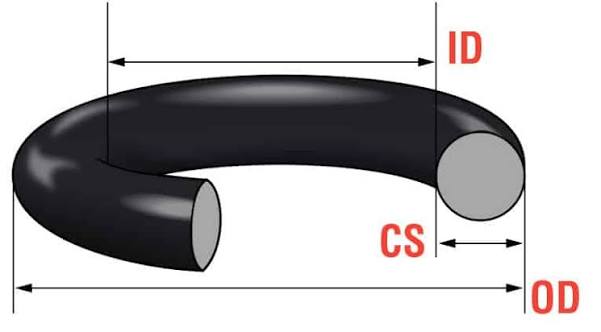
- Bespoke Dimensional Tolerances: Precision custom molding capable of achieving tight dimensional tolerances for non-standard groove designs, large-diameter flanges, and complex geometries.
- Material and Compound Customization: Tailored elastomer selections—including HNBR, FKM, FVMQ, and NBR—formulated explicitly to match the chemical and thermal profile of the transported media.
- Visual and Brand Differentiation: Flexible options for custom color coding to simplify field identification, alongside proprietary brand logo molding for OEM equipment manufacturers.
- Collaborative Development Process: End-to-end engineering support ranging from initial computer-aided prototyping and finite element analysis (FEA) to rapid sample production and full-scale manufacturing runs.
Technical Deep-Dive: Material Science and Selection Guide for Gas Pipeline O-Rings
Selecting the correct polymer for a gas pipeline application requires a systematic evaluation of operating parameters. Procurement engineers seeking out the best Custom O-ring manufacturers must balance mechanical properties with environmental exposure thresholds to prevent premature component degradation.
- Understanding Elastomer Aging: Thermal oxidation, ozone attack, and UV radiation can embrittle standard rubbers; selecting saturated polymers like HNBR or FKM significantly extends operational lifespans in exposed valve housings.
- Durometer Selection Strategy: Utilizing Shore A hardness ratings effectively—typically ranging from 70 to 90 Durometer—to prevent seal extrusion into high-pressure pipeline clearance gaps without sacrificing initial sealing contact pressure.
- Step-by-Step Selection Methodology:
- Define maximum and minimum operating temperatures, factoring in both ambient weather and fluid friction.
- Analyze the chemical composition of the gas stream, noting trace additives, odorants, and dehydration glycols.
- Determine maximum working pressure and potential pressure spike frequencies to evaluate extrusion risk.
- Consult with polymer engineers to match compound swell limits (ideally under 10% volume change in service fluids).
- Verification Protocols: Conducting standardized compression set testing (e.g., ASTM D395) and immersion testing to validate long-term elasticity and chemical compatibility before field deployment.
Quality Assurance, Compliance, and Why Industry Leaders Choose Bode
In the energy sector, quality is non-negotiable. Ensuring absolute reliability requires strict adherence to international quality management frameworks and rigorous testing at every stage of production.
- Multistage Quality Control: Comprehensive inspection protocols spanning incoming raw polymer verification, in-process dimension checks, and final post-curing physical property testing.
- Full Lot Traceability: Meticulous documentation tracking each batch from raw material compounding through to the final packaged sealing component, ensuring complete accountability.
- International Standards Adherence: Manufacturing practices aligned with global quality benchmarks to guarantee safety and performance across international energy markets.
- Partnering for Success: By combining German engineering oversight, robust manufacturing infrastructure in Xiamen, and flexible OEM/ODM capabilities, Bode delivers the reliability modern energy grids demand. Contact our engineering team today to discuss your project requirements and kickstart your custom manufacturing journey.