The European natural gas infrastructure is undergoing a period of unprecedented transformation and scrutiny. Stretching across thousands of kilometers—from the freezing offshore rigs of the North Sea to the vital cross-border transit pipelines traversing the Alps and Eastern Europe—this network is the lifeblood of the continent’s energy and municipal heating systems. As the European Union accelerates its Green Deal initiatives, municipal governments and private operators are not only maintaining aging natural gas lines but also preparing grids for hydrogen blending. In this high-stakes environment, the integrity of every connection, valve, and flange is critical. Even a microscopic flaw in a pipeline seal can lead to disastrous environmental leaks, catastrophic safety incidents, and severe regulatory penalties under strict EU directives.
For European municipal engineers, procurement directors, and facility managers, sourcing high-grade sealing components is a primary operational imperative. Partnering with the best Custom Seals manufacturer ensures compliance with stringent European standards, guarantees operational continuity, and future-proofs infrastructure. This definitive guide explores the advanced material science behind gas pipeline sealing, outlines actionable procurement strategies tailored to the European market, and highlights the unparalleled capabilities of Bode (BodeDynamic)—a manufacturer that perfectly unites German engineering precision with robust global production scale.
The Science of Gas Pipeline Sealing: Overcoming European Environmental Extremes
To make authoritative procurement decisions, industry professionals must understand the severe physical and chemical conditions present within high-pressure gas transmission networks. Standard commercial rubber components are dangerously inadequate for these environments. High-performance custom seals are engineered to combat several highly destructive phenomena specific to pipeline operations.
- Combating Rapid Gas Decompression (RGD): In transmission lines operating at immense pressures (often exceeding 100 bar), gas molecules permeate the microscopic elastomer structure of the seal over time. If a valve undergoes an emergency shutdown or blowdown, the system pressure drops rapidly. The trapped gas inside the seal violently expands. In low-quality seals, this causes internal blistering, deep fissures, and explosive structural rupture—known as Explosive Decompression (ED). Premium seals utilize tightly cross-linked polymer matrices, specifically engineered and rigorously tested (e.g., via NACE TM0297 or EN standards) to resist RGD and maintain their geometry during rapid depressurization.
- Chemical Degradation and the Hydrogen Transition: European pipelines frequently manage varying compositions of gas, including sour gas containing corrosive Hydrogen Sulfide ($H_2S$). Furthermore, as European municipalities increasingly inject hydrogen into the natural gas grid to lower carbon emissions, seals face new chemical challenges. Hydrogen molecules are incredibly small and can cause embrittlement or higher permeation rates in standard rubbers. Custom sealing solutions require advanced fluoroelastomers (FKM) or Hydrogenated Nitrile Butadiene Rubber (HNBR) formulated to withstand prolonged chemical attacks and adapt to upcoming hydrogen-blend realities.
- Managing Extreme Thermal Cycles: Seals deployed in the European grid must perform flawlessly across massive temperature spectrums. A seal in a Nordic municipal facility must not undergo a “glass transition” (where rubber becomes hard and brittle) during sub-zero winters. Conversely, the intense friction within gas compressor stations generates immense localized heat. Custom formulations ensure the elastomer remains perfectly flexible at -40°C while resisting thermal degradation at continuous operational temperatures exceeding 150°C.
Key Criteria for Evaluating the best Custom O-ring manufacturers in Europe
Identifying a reliable manufacturing partner for the European market requires evaluating suppliers against some of the strictest technical and regulatory standards in the world. Procurement teams must look beyond standard catalogs and assess manufacturers based on the following rigorous criteria:
- DVGW and EN Compliance: In Europe, the gold standard for gas and water applications is certification and compliance with standards set by the DVGW (Deutscher Verein des Gas- und Wasserfaches) and specific European Norms such as EN 682 (Elastomeric seals for pipes and fittings used in gas supply). A top-tier manufacturer will have the capability to engineer compounds that meet or exceed these exacting specifications.
- Proprietary Polymer Compounding: Elite manufacturers do not rely on pre-mixed, generic rubber batches. They possess deep in-house compounding expertise, allowing them to formulate bespoke blends of FKM, HNBR, and FFKM tailored precisely to the chemical composition, pressure ratings, and temperature requirements of a specific municipal project.
- Precision Machining for Zero-Leakage Tolerances: High-pressure European gas valves require absolute zero-leakage tolerances. Look for manufacturers that utilize multi-axis CNC machining for their molds, achieving micro-millimeter precision. This ensures flawless O-ring parting lines and exceptional surface finishes, eliminating minute defects that could become leak paths under high barometric pressure.
- Total Traceability and REACH Compliance: Under European REACH regulations (Registration, Evaluation, Authorisation and Restriction of Chemicals), material transparency is non-negotiable. The best manufacturers implement comprehensive batch traceability systems, tracking every single seal back to its original raw elastomer batch, curing parameters, and material safety data.
BodeDynamic: German Engineering Merged with Global Manufacturing Excellence
When European municipal governments and major industrial buyers seek the ultimate combination of European engineering rigor and highly scalable, cost-effective production, Bode (BodeDynamic) stands out as the premier strategic partner. With deep roots in German engineering philosophy, Bode has established itself as a highly specialized and trusted custom parts manufacturer since 2008.
- German R&D and Material Science Leadership: The fundamental core of Bode’s exceptional quality is its research and development structure. The front-end elastomer formulation, material science research, and initial compound development are managed directly by senior engineers from the German headquarters. This ensures that the chemical foundation of every seal inherently aligns with the strictest European engineering standards and DVGW expectations.
- Strategic Global Manufacturing Hub: To provide scalable and cost-effective solutions without compromising on German quality, Bode established its dedicated production branch in Xiamen, China, in 2008. This facility specializes in the custom production of high-performance rubber rings and seals for demanding sectors, including gas pipelines, oil seals, and water treatment facilities.
- Prime Logistical Advantage: The Bode Xiamen company is strategically located in the International Shipping Center of Huli District. This location offers highly convenient global logistics, providing direct and rapid sea and air freight routes straight to major European ports (such as Rotterdam or Hamburg), ensuring secure and timely supply chains for European infrastructure projects.
- Massive and Agile Production Capacity: Once the German engineering team perfects a custom compound, mass production is flawlessly executed through a network of 5 specialized cooperative factories dedicated to finished product processing. The Xiamen operation is supported by over 100 highly skilled employees, a modern office complex, and over 30 sets of advanced, complete production equipment.
Unyielding Product Advantages for Complex European Projects
As the best Custom Seals manufacturer, BodeDynamic rejects the “one-size-fits-all” mentality. Every European pipeline project, from urban municipal heating grids to high-pressure transit lines, has entirely unique operational parameters. Bode’s core product advantages are driven by absolute customization.
- Application-Specific Material Engineering: Whether a project requires highly saturated HNBR for a sour gas application or specialized, low-temperature resistant NBR for a Northern European municipal grid, Bode engineers the exact molecular compound required to maximize operational lifespan and ensure regulatory compliance.
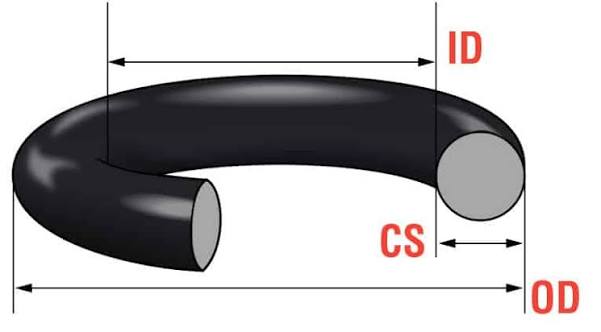
- Complete Dimensional Customization: Standardized sealing sizes often fail to meet the intricate requirements of specialized European infrastructure or the retrofitting of aging municipal legacy systems. Bode provides complete dimensional freedom, producing custom profiles, oversized O-rings, and complex cross-sections with ultra-tight tolerances for a flawless mechanical fit.
- Advanced Visual and Functional Customization: Safety and maintenance efficiency are paramount. Bode supports comprehensive visual customization, including the color-coding of seals. This allows European maintenance crews to instantly visually identify the correct material type during high-pressure valve maintenance, preventing fatal installation errors. Additionally, Bode can mold custom logos and part numbers directly into the parts for OEM branding and traceability.
- Cross-Sector Expertise (Water and Gas): European municipal buyers often procure for multiple utilities simultaneously. Beyond gas pipelines, Bode possesses deep expertise in the water treatment sector, engineering seals that meet strict European potable water standards (like KTW/W270 or WRAS). This makes Bode an invaluable, consolidated supplier for city-wide infrastructure overhauls.
Complete OEM & ODM Capabilities for European Municipalities
For European procurement directors, the sophistication of the factory’s service model is just as critical as the physical product. Bode has engineered a frictionless, highly supportive, and technically advanced service framework tailored for complex B2B partnerships.
- End-to-End OEM and ODM Solutions: Bode offers comprehensive engineering support. If a European engineering firm has fully detailed CAD drawings, Bode’s Original Equipment Manufacturer (OEM) service will execute them with absolute precision. If a municipality faces a conceptual problem—such as recurring seal blowouts in a specific pressure-reducing station—Bode’s Original Design Manufacturer (ODM) team will analyze the failure, design a custom seal profile, formulate the precise material, and solve the issue from the ground up.
- Rapid Prototyping and Field Testing: Infrastructure upgrades operate on strict timelines. Bode leverages its advanced tooling equipment to rapidly turn German-engineered compound formulations into physical prototypes. This agility allows European engineers to conduct real-world field testing and validation much faster than industry averages, significantly reducing project lead times.
- Rigorous, Data-Driven Quality Control (QC): Quality in the gas sector cannot be assumed; it must be empirically verified. Every batch of custom seals produced by Bode undergoes exhaustive laboratory testing before shipment. This includes Shore hardness testing, tensile strength and elongation evaluations, compression set analysis, and specific gravity checks, ensuring the physical product flawlessly matches the theoretical German engineering models.
Actionable Procurement Guide: Tools and Steps for Sourcing Excellence
Upgrading pipeline sealing infrastructure requires a structured, highly analytical approach to ensure technical alignment between European engineering requirements and the manufacturer’s capabilities. Procurement officers should implement the following actionable, step-by-step protocol:
- Step 1: Execute the P.E.T. Parameter Analysis (Pressure, Environment, Temperature)Before contacting any supplier, meticulously define the operational realities of your infrastructure using the P.E.T. framework:
- Pressure: Document the standard operating pressure (in bar), maximum surge pressure, and the specific rate of pressure decompression the system may experience during emergency venting.
- Environment: Catalog every chemical exposure. Do not simply state “natural gas.” Specify the exact percentages of Methane, trace Hydrogen Sulfide ($H_2S$), Carbon Dioxide, and notably, the percentage of Hydrogen ($H_2$) if the grid is part of a green energy blending initiative.
- Temperature: Record the absolute lowest ambient winter temperature the pipeline will endure and the highest internal friction temperature.
- Step 2: Scrutinize Material Data Sheets (MDS) and CertificationsPrioritize material science over initial unit pricing. Request the full Material Data Sheet for the proposed compound from the manufacturer. Verify that the compression set percentage is low (ensuring long-term elasticity and sealing force) and cross-reference the material’s properties against relevant EN 682 or DVGW requirements.
- Step 3: Mandate a First Article Inspection (FAI)Never transition directly to mass production for critical gas infrastructure. Demand a small batch of First Article prototypes. Upon receipt, utilize standard digital calipers to verify the cross-section and inner diameter tolerances against your CAD drawings. Utilize a Shore A durometer to confirm the material hardness perfectly matches the provided MDS specifications.
- Step 4: Implement Advanced Inventory Management (Shelf-Life Protocols)Once your premium custom seals arrive, protect the investment. Elastomers possess a specific shelf life and can degrade if stored improperly. Implement a strict First-In, First-Out (FIFO) inventory system. Store all gas seals in airtight, UV-blocking packaging within a climate-controlled environment (ideally between 15°C and 25°C). Ensure they are kept far away from direct sunlight, extreme humidity, or ozone-generating electrical equipment.
The safety, efficiency, and environmental compliance of Europe’s natural gas and municipal infrastructure rely heavily on the hidden, unyielding performance of elastomeric seals. Utilizing standard, mass-market components introduces unacceptable risks of catastrophic failure. By mastering the rigorous science behind chemical resistance, explosive decompression, and thermal stability, European procurement teams can elevate their infrastructure to the highest echelons of safety.
Operating at the pinnacle of the global sealing market, BodeDynamic represents the ultimate strategic sourcing solution. By seamlessly integrating the uncompromising material science and analytical precision of German engineering with the vast manufacturing scale, agility, and logistical advantages of its Xiamen facilities, Bode delivers world-class custom sealing solutions tailored for the most demanding European applications. Whether requiring bespoke compounds for hydrogen-blended networks or dimensionally customized seals for aging municipal water grids, Bode is your dedicated partner for OEM and ODM excellence. Contact Bode today to share your most challenging operational parameters, and initiate your custom manufacturing journey with a global leader engineered for absolute reliability.