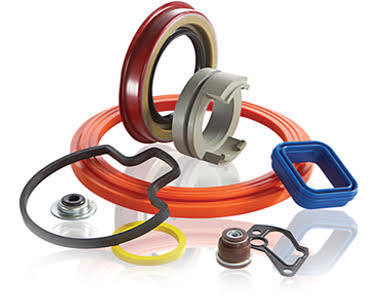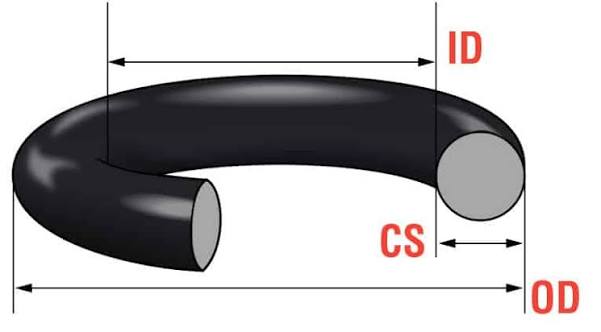
A single €2 O-ring failure can trigger tens of thousands of euros in unexpected equipment downtime, environmental fines, and compromised safety. In the highly regulated European industrial sector, where machinery operates under extreme pressures and stringent environmental protocols, relying on generic, off-the-shelf sealing components is a significant operational risk. Procurement managers and engineers are increasingly shifting away from standardized catalogs to seek bespoke solutions tailored to precise operational environments. Navigating this landscape requires understanding material science, evaluating global supply chains, and identifying manufacturing partners capable of bridging high-end engineering with scalable production. This guide provides actionable insights into selecting the right sealing materials for water and oil applications, auditing supplier capabilities, and leveraging the strategic advantages of globalized production to secure premium custom rubber seals.
Criteria for the Best Custom Seals Manufacturer
European industries—spanning automotive, aerospace, heavy machinery, and fluid handling—demand strict adherence to international standards. When evaluating a potential supply partner, the distinction between a generic vendor and the best Custom Seals manufacturer lies in their foundational commitment to engineering precision, material purity, and regulatory compliance.
- Stringent Regulatory Compliance: A premier manufacturer must demonstrate native compliance with critical European directives. This includes REACH (Registration, Evaluation, Authorisation and Restriction of Chemicals) and RoHS (Restriction of Hazardous Substances) to ensure no banned substances are used. For specialized sectors, adherence to DIN 3771 and ISO 3601 for O-ring dimensional tolerances is non-negotiable.
- Precision Tooling and Dimensional Accuracy: Industrial applications often require custom seals to fit perfectly into non-standard grooves. Top manufacturers invest heavily in precision mold-making capabilities to maintain micro-millimeter tolerances, preventing extrusion and leakage under high dynamic pressures.
- Comprehensive Testing Capabilities: True manufacturing partners do not rely solely on third-party labs. They possess in-house testing equipment to measure compression set, tensile strength, elongation at break, and thermal aging, ensuring that every batch of elastomer performs exactly as engineered.
- Prototyping and Agility: The ability to move rapidly from a digital CAD file to a physical prototype is crucial. Leading manufacturers offer rapid prototyping services to allow European engineers to field-test custom profiles before committing to mass production tooling.
German R&D Meets Agile Production Excellence
To remain competitive, European procurement teams require the rigorous quality control associated with German engineering, combined with the cost-efficiency and scalability of Asian manufacturing. Bode (BodeDynamic) exemplifies this optimized hybrid model. Operating with a dual-axis structure, the company’s German headquarters oversees the critical front-end processes: advanced elastomer formulation, R&D, and product design. This ensures that the foundational technology meets exacting European standards.
The physical execution takes place at Bode’s specialized manufacturing hub in China. Established in 2008, the Xiamen branch operates out of a modern facility located in the Huli District International Shipping Center. This strategic location provides a massive logistical advantage for European buyers, ensuring rapid, frictionless export routing via one of the world’s most efficient ports.
Bode’s operational footprint is designed for high-capacity, customized output:
- Extensive Manufacturing Network: Operations are supported by 5 dedicated cooperative factories, providing immense flexibility to scale production up or down based on procurement demands.
- Advanced Equipment: The facility houses 30 state-of-the-art production machines, ensuring high-volume runs without compromising dimensional stability.
- Skilled Workforce: A dedicated team of over 100 skilled technicians and engineers oversees daily operations, enforcing the strict quality assurance protocols dictated by the German headquarters.
This synergy—European engineering foresight paired with the robust, scalable manufacturing capabilities of the Xiamen hub—provides a blueprint for how European industries can source premium seals without inflating their supply chain costs.
Material Science: Water Treatment vs. Oil Seals
Selecting the correct elastomer is the single most critical decision in custom seal procurement. Even the most precisely molded O-ring will fail rapidly if the base material is incompatible with the system’s media, temperature, or pressure. The two most common, yet distinct, applications in European manufacturing are water treatment systems and hydraulic oil systems.
Water Treatment Applications (EPDM)
Water treatment facilities, municipal plumbing, and HVAC systems expose seals to continuous moisture, ozone, and sanitizing chemicals like chlorine and chloramine.
- The Solution: Ethylene Propylene Diene Monomer (EPDM) is the industry standard for these environments.
- Key Advantages: EPDM offers exceptional resistance to weathering, ozone, and UV degradation. More importantly, specialized EPDM formulations can be certified for drinking water safety (e.g., WRAS, KTW, NSF-61), ensuring no toxic compounds leach into the water supply.
- Limitations: EPDM swells and degrades rapidly when exposed to petroleum-based oils and fuels; it must never be used in hydraulic applications.
Oil Seal Applications (NBR and FKM)
Industrial hydraulics, automotive engines, and heavy machinery require seals that can withstand constant exposure to petroleum-based fluids, high friction, and fluctuating temperatures.
- Standard Solution (NBR): Nitrile Butadiene Rubber (NBR) is the workhorse for general oil and fluid sealing. It provides excellent abrasion resistance and handles standard petroleum oils and mineral-based hydraulic fluids efficiently at moderate temperatures.
- High-Performance Solution (FKM): For high-temperature environments or systems utilizing aggressive synthetic lubricants, Fluorocarbon Rubber (FKM/Viton) is required. FKM maintains its mechanical properties under extreme heat and resists a vast array of harsh chemicals.
| Material | Primary Application | Continuous Temp Range | Key Strengths | Vulnerabilities |
| EPDM | Water, Steam, HVAC | -45°C to +150°C | Excellent ozone, weather, and water resistance. Drink-water certifiable. | Poor resistance to petroleum oils and fuels. |
| NBR | General Hydraulics, Oil | -30°C to +100°C | High abrasion resistance, excellent with standard mineral oils. | Poor resistance to ozone, UV, and extreme heat. |
| FKM | High-Temp Oil, Chemicals | -20°C to +200°C+ | Unmatched high-temperature stability, resists harsh synthetic fluids. | Higher cost, poor performance in low-temperature extremes. |
Bode’s engineering team actively collaborates with buyers to fine-tune these base elastomers, adjusting the durometer (hardness) and compounding additives to match the exact physical demands of the client’s equipment.
Tailored Solutions by Best Custom O-ring Manufacturers
Standardization ends where cutting-edge industrial design begins. The best Custom O-ring manufacturers do not just sell parts; they integrate into the buyer’s product development cycle. Bode offers a comprehensive suite of customization options specifically designed to support Original Equipment Manufacturers (OEM) and Original Design Manufacturers (ODM) across Europe.
- Non-Standard Dimensions: When a new pump or valve design requires a non-standard gland depth, Bode can develop custom tooling to produce O-rings and complex seal profiles that perfectly match the proprietary hardware, eliminating the need to compromise equipment design to fit standard seals.
- Environmental Customization: Buyers operating equipment in extreme environments—such as deep-sea submersibles or sub-zero arctic pipelines—can request custom material formulations that alter the elastomer’s glass transition temperature or improve its explosive decompression resistance.
- Aesthetic and Branding Adjustments: For consumer-facing industrial products or complex assembly lines where visual identification is critical, Bode provides color-matching services. Seals can be produced in specific colors to indicate material type (e.g., green for FKM, black for NBR) or to align with corporate branding. Furthermore, custom logos or part numbers can be subtly integrated into the mold for traceability and brand protection.
- OEM & ODM Lifecycle Support: From the initial review of 3D CAD models to the delivery of the first article inspection (FAI) report, Bode manages the entire lifecycle. This includes mold flow analysis, prototype batching, and scaling to millions of units with zero degradation in quality.
4 Steps to Evaluate Supplier Capacity & QA
For European procurement teams looking to establish a long-term partnership with a custom rubber manufacturer, conducting a structured evaluation is critical. Implement this 4-step actionable audit to verify supplier capabilities before placing an initial order.
- Trace Raw Material Lineage: Do not accept generic material claims. Request Material Test Reports (MTRs) for the raw elastomer batches. Ensure the supplier sources base polymers from reputable global chemical giants and clearly documents the compounding process. Consistent raw materials are the only way to prevent batch-to-batch variance.
- Audit Tooling and Machining Precision: Request details on the supplier’s production infrastructure. For instance, verify if they utilize advanced CNC machinery for mold creation and computer-controlled vulcanization presses. Bode’s deployment of 30 specialized production machines ensures that pressure and temperature are strictly regulated during the curing process, resulting in flawless surface finishes.
- Review the Quality Assurance (QA) Protocol: A robust QA system must go beyond visual inspection. Ask for documented procedures on how they measure specific gravity, hardness (Shore A), compression set, and tensile strength. Best practices involve utilizing Finite Element Analysis (FEA) software during the design phase to simulate how the seal will behave under operational stress.
- Assess Supply Chain Agility and Scalability: Evaluate the manufacturer’s ability to handle surge demand. A single point of failure in production can cripple your supply chain. Bode mitigates this risk through its network of 5 cooperative factories, ensuring that if one line is at capacity, production can seamlessly shift to another within their network without impacting delivery timelines to Europe.
Future Trends in High-Performance Rubber Seals
The sealing industry is rapidly evolving to meet the demands of Industry 4.0 and global sustainability targets. European markets are increasingly demanding “smart seals” integrated with micro-sensors capable of monitoring wear, temperature, and pressure fluctuations in real-time, enabling predictive maintenance before catastrophic failure occurs. Additionally, there is a strong push toward sustainable elastomer compounding, focusing on reducing the carbon footprint of the curing process and developing bio-based rubber alternatives that do not sacrifice mechanical performance.
Partnering with an agile, research-driven manufacturer is the most effective way to stay ahead of these technological shifts. By combining German engineering rigor with scalable, high-precision manufacturing out of Xiamen, Bode provides the expertise, customization, and logistical efficiency required to power Europe’s most demanding industrial applications. Reach out to the engineering team today to share your CAD drawings, discuss your specific operational environments, and initiate your custom sealing solution.