Mastering Water Filtration Sealing: How German Engineering Meets North American Demands
In the highly demanding world of North American water treatment and filtration, the line between a system’s flawless operation and a catastrophic failure is often measured in millimeters. Whether it is a multi-stage Reverse Osmosis (RO) system under a residential sink, a heavy-duty industrial desalination plant, or municipal water purification infrastructure, the integrity of the entire system relies heavily on the smallest components: the rubber seals and O-rings. A single compromised seal can lead to pressure loss, cross-contamination, secondary bacterial growth, or severe water damage, costing companies thousands of dollars in warranty claims and irreversible brand damage.
As environmental regulations tighten and consumer expectations for pure, safe drinking water rise across the United States and Canada, procurement managers and engineers are facing unprecedented pressure. Standard, off-the-shelf rubber rings are no longer sufficient to combat the complex chemical cocktails and extreme pressure fluctuations inherent in modern water treatment. This is where specialized engineering steps in.
Bridging the gap between elite European research and highly efficient global manufacturing, BodeDynamic (Bode) has emerged as a critical partner for North American brands. By combining the relentless precision of German R&D with the robust, scalable manufacturing capabilities of its specialized facility in Xiamen, China, Bode provides unparalleled solutions. This comprehensive guide will explore the hidden physics of sealing failures, outline exactly how to evaluate your supply chain, and demonstrate why partnering with a specialized expert is the most profitable decision for your filtration business.
The Hidden Physics of Water Purification Seals
To truly appreciate the value of a high-quality customized seal, one must first understand the brutal environment inside a water filtration system. Procurement teams often treat O-rings as simple commodities, but from an engineering perspective, they are dynamic, load-bearing structures constantly fighting against physical and chemical degradation.
The Threat of Water Hammer (Hydraulic Shock)
In both residential and industrial water systems, valves open and close rapidly. When a high-velocity flow of water is suddenly halted, it creates a shockwave known as the “water hammer effect.” This hydraulic shock causes pressure spikes that can exceed the system’s baseline pressure by up to five times.
- The Result: Standard, low-quality O-rings lack the tensile strength and rapid elastic recovery needed to withstand these sudden spikes. The rubber can be instantly deformed or violently pushed into the clearance gap between metal or plastic hardware—a phenomenon known as extrusion failure. Once extruded, the seal is shredded, leading to immediate leakage.
Chemical Degradation: The Chloramine Challenge
According to the American Water Works Association (AWWA), over 20% of North American municipal water treatment facilities have switched from traditional chlorine to chloramine (a combination of chlorine and ammonia) for secondary disinfection. While safer for human consumption, chloramine is exceptionally aggressive toward standard elastomers.
- The Mechanism: Chloramine attacks the polymer chains within standard Nitrile (NBR) and lower-grade EPDM rubbers, stripping them of their plasticizers. Over a short period, the rubber becomes hard, brittle, and covered in micro-cracks. A seal that was supposed to last five years might fail in six months under high chloramine exposure.
Compression Set and Creep
Water filtration units often sit in high-temperature environments (such as commercial boiler feeds or outdoor industrial skids) under constant compressive force. Over time, rubber tends to lose its “memory”—its ability to return to its original shape. This metric is known as the “Compression Set.” If an O-ring has a high compression set, it flattens out permanently. When the water pressure drops or temperature fluctuates, the flattened seal can no longer expand to fill the micro-gaps, resulting in insidious, slow-drip leaks.
Understanding these hidden physics is the first step for any engineer or buyer. It proves that sourcing seals is not about finding the cheapest rubber ring; it is about finding a polymer solution engineered for a specific destructive environment.
Core Criteria for Evaluating the best Custom O-ring manufacturers
When auditing potential supply chain partners, North American buyers must look beyond the sales pitch and dive into material science, compliance, and quality control data. If you are searching for the best Custom O-ring manufacturers in the global market, they must meet the following strict criteria.
1. Mastery of Advanced Material Science
A top-tier manufacturer will not just offer “rubber”; they will offer specifically compounded elastomers tailored to your fluid medium. For water filtration, your manufacturer must demonstrate expertise in:
- Food-Grade EPDM (Ethylene Propylene Diene Monomer): The gold standard for drinking water. EPDM offers exceptional resistance to ozone, UV, and chloramine. However, the manufacturer must use peroxide-cured EPDM rather than sulfur-cured, as peroxide curing yields a significantly lower compression set and leaves no taste or odor in the drinking water.
- FKM (Fluoroelastomer): Essential for industrial filtration handling harsh chemicals, acids, or petroleum by-products. FKM can withstand extreme temperatures (up to 200°C / 392°F) and harsh chemical washdowns.
- Medical-Grade Silicone: Used in high-end consumer RO systems and UV purification chambers due to its absolute biological inertness and extreme temperature flexibility.
2. Rigorous North American Compliance and Certification
A seal that touches drinking water in the USA or Canada must pass stringent health and safety tests. Your manufacturer must be capable of providing compounds that meet:
- NSF/ANSI Standard 61: The crucial standard for drinking water system components, ensuring no harmful contaminants (like heavy metals or toxic plasticizers) leach into the water.
- FDA 21 CFR 177.2600: The benchmark for rubber articles intended for repeated use in food and beverage applications.
- RoHS and REACH: Ensuring the products are free from restricted hazardous substances, a must for electronic water purifiers and smart filtration systems.
3. The Procurement Manager’s Verification Checklist
Do not take quality claims at face value. Before signing a contract, utilize this practical checklist:
- [ ] Request the Material Test Report (MTR): Ensure it lists the specific cure system (e.g., peroxide-cured) and compound batch.
- [ ] Verify the Shore A Hardness: Most water systems require 70 Durometer hardness, but high-pressure systems may need 80 or 90 to prevent extrusion. Ask your supplier for their tolerance limits (e.g., ±5 points).
- [ ] Ask for Compression Set Data: Look for a compression set of less than 15% after 22 hours at 100°C for high-quality EPDM.
German Material Science & Xiamen Manufacturing Excellence
Knowing the strict criteria required by North American buyers, it becomes clear why BodeDynamic (Bode) has positioned itself as an industry leader. By strategically splitting its operations between European chemical engineering and Asian production efficiency, Bode offers a unique, highly competitive advantage.
The Foundation: European Engineering Expertise
The soul of Bode’s quality lies in its German headquarters. Here, senior polymer engineers are responsible for the front-end research and development of the core rubber compounds. By managing the chemical formulation in Germany, Bode ensures that every batch of raw material possesses the exact molecular cross-linking required to resist chloramine degradation, withstand high pressure, and meet NSF/FDA safety standards.
The Engine: Xiamen Manufacturing Powerhouse
While the science is German, the scalable execution takes place in China. Established as a dedicated branch in 2008, Bode’s Xiamen operation is specifically tailored to produce custom O-rings and complex seals for both the water treatment and high-pressure oil seal industries.
Located in the highly accessible, picturesque Huli District International Shipping Center in Xiamen, the company is perfectly positioned for rapid global logistics. The facility’s operational metrics speak to its formidable capacity:
- Human Capital: A dedicated team of 100 highly trained employees operating within a modern, state-of-the-art office and production facility.
- Production Hardware: Equipped with 30 advanced production machines, including high-precision vacuum vulcanizing presses and automated cryogenic deflashing equipment, ensuring perfect surface finishes without molding flash.
- Supply Chain Resilience: Bode does not operate in isolation. The Xiamen branch is backed by a robust network of 5 deeply integrated partner factories responsible for specialized finished-product processing. This ecosystem guarantees that whether a client orders 10,000 pieces or 10 million, lead times and quality remain completely stable.
This dual-continent structure means North American buyers do not have to choose between cutting-edge material quality and cost-effective, high-volume production—Bode delivers both simultaneously.
Precision OEM & ODM Capabilities for Complex Filtration Systems
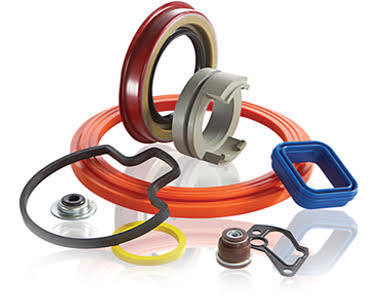
Standard dimensions like AS568 or metric O-rings are sufficient for basic plumbing, but proprietary, patented water filtration systems require bespoke solutions. As a premier Custom Seals manufacturer, BodeDynamic excels in Original Equipment Manufacturer (OEM) and Original Design Manufacturer (ODM) services, ensuring your seal perfectly matches your unique hardware.
Beyond the Standard Shape and Size
Many modern RO membranes and quick-connect water fittings utilize non-circular housing or require specific lip seals to function seamlessly. Bode’s custom capabilities cover every dimension of the product:
- Custom Dimensions: Whether you need a micro-seal for a smart-faucet sensor or a massive custom gasket for an industrial municipal filter housing, Bode can mold to exact micro-tolerances.
- Visual Management & Branding: For complex multi-stage filters (e.g., Sediment, Carbon block, RO membrane), assembly lines can easily confuse standard black O-rings. Bode offers custom-colored elastomers (e.g., blue for cold water, red for hot, green for specific RO membranes) to mistake-proof your assembly process. Furthermore, custom logo embossing on larger gaskets is available for brand protection and anti-counterfeiting.
- Specialized Working Conditions: If your system operates in highly specific environments—such as pumping highly acidic industrial wastewater or high-friction hydraulic oil systems—Bode formulates custom blends that balance abrasion resistance with chemical inertness.
Leveraging Professional Engineering Tools
Bode does not rely on guesswork. When North American clients approach Bode with an ODM request, the engineering team utilizes advanced methodologies to ensure success:
- 3D CAD Modeling & Groove Design: If you are designing a new filter housing, Bode’s engineers will review your gland/groove dimensions to ensure optimal seal squeeze (typically targeting 15% to 30% compression for static seals).
- Finite Element Analysis (FEA): For critical applications, Bode can simulate how the rubber will deform and distribute stress when subjected to your specific water pressure, identifying potential extrusion risks before a single mold is cut.
By acting as an extension of your own engineering department, Bode ensures that the seal design actively enhances the lifespan and performance of your final product.
Step-by-Step: Streamlining Your Custom Seal Procurement Strategy
To immediately benefit from Bode’s expertise, North American buyers and engineers should adopt a structured approach to procurement. Communicating technical needs accurately drastically reduces lead times and prevents costly prototyping errors. Here is an actionable guide to initiating your custom order.
Step 1: Build a Comprehensive RFQ (Request for Quote) Profile
Do not simply ask for “a quote on a 2-inch rubber ring.” Use this professional framework when contacting Bode:
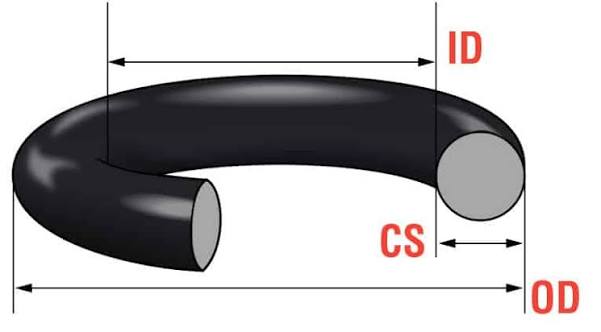
- Hardware Dimensions: Provide the exact inner and outer dimensions of the metal/plastic groove (gland), not just the desired size of the O-ring.
- Operating Medium: Explicitly state what the seal will touch (e.g., “City tap water with chloramine,” “Reverse Osmosis purified water,” or “Hydraulic Oil”).
- Temperature Range: Provide the minimum, continuous operating, and maximum spike temperatures.
- Pressure Dynamics: State the operating pressure (e.g., 60 PSI) and whether it is static (constant) or dynamic (pulsing/hammering).
- Certifications Required: Clearly list required compliances (e.g., FDA, NSF 61).
Step 2: Engage in the Rapid Prototyping Phase
Once your requirements are submitted, Bode’s German-backed engineering team will recommend the optimal elastomer compound. Bode will then produce initial prototypes utilizing their rapid tooling capabilities. This phase is crucial for testing.
Step 3: Conduct Vigorous In-House Testing
When you receive the custom samples from Bode’s Xiamen facility, subject them to real-world abuse.
- Pressure Cycling Test: Install the seal in your filtration unit and subject it to 10,000 cycles of rapid pressure spikes to check for extrusion.
- Accelerated Aging: Submerge the seals in a highly concentrated solution of your operating fluid at elevated temperatures for 72 hours to measure volume swell and hardness degradation.
Step 4: Scale with Confidence
Once prototypes pass your internal audits, Bode’s robust infrastructure—anchored by 30 production machines and 5 partner factories—ensures a seamless transition to mass production. Their strict quality assurance protocols guarantee that the millionth seal performs exactly like the approved prototype.
Elevate Your Filtration Systems Today
In the competitive landscape of water purification and industrial fluid management, a system is only as strong as its weakest seal. Compromising on rubber components is a risk no reputable brand can afford to take. By combining world-class German material science with the massive production scale and efficiency of their Xiamen headquarters, BodeDynamic provides a truly unmatched OEM/ODM sealing solution.
Do not let standard seals dictate the limitations of your innovative filtration technology. Protect your brand, enhance your product lifespan, and streamline your supply chain with a partner who understands the deep science of sealing.
Contact BodeDynamic today to consult with our engineering team, request your custom material samples, and begin your ultimate customization journey!